Fox Face Type: Features, Meaning, Makeup and How to Tell If You Have It
A practical guide to the fox face type: narrow or elongated lines, lifted eyes, a focused expression, makeup cues, and the difference between a full fox face and fox eye shape.

Editorial note
Fox face type is a beauty-language and animal face type concept, not a medical, personality, or attractiveness diagnosis. Use it as a light descriptive lens for style, makeup, and photo interpretation.
Quick answer
- Fox face type usually reads narrow, refined, directional, and slightly mysterious rather than round or openly soft.
- The strongest cues are lifted or slanted eyes, a longer or narrower facial outline, defined cheekbones, and a focused expression.
- Fox face is not the same as fox eye shape: fox eyes describe one eye signal, while fox face type considers the whole face.
- Cat and fox overlap often; fox usually feels more elongated and sharper, while cat feels more balanced and polished.
- Photo angle, makeup, lighting, and expression can change the result, so mixed fox, cat, deer, or tiger signals are normal.
The search fox face type usually comes from someone who already knows the animal face trend but wants a more specific answer: what makes a human face read fox-like instead of cat-like, deer-like, or simply sharp?
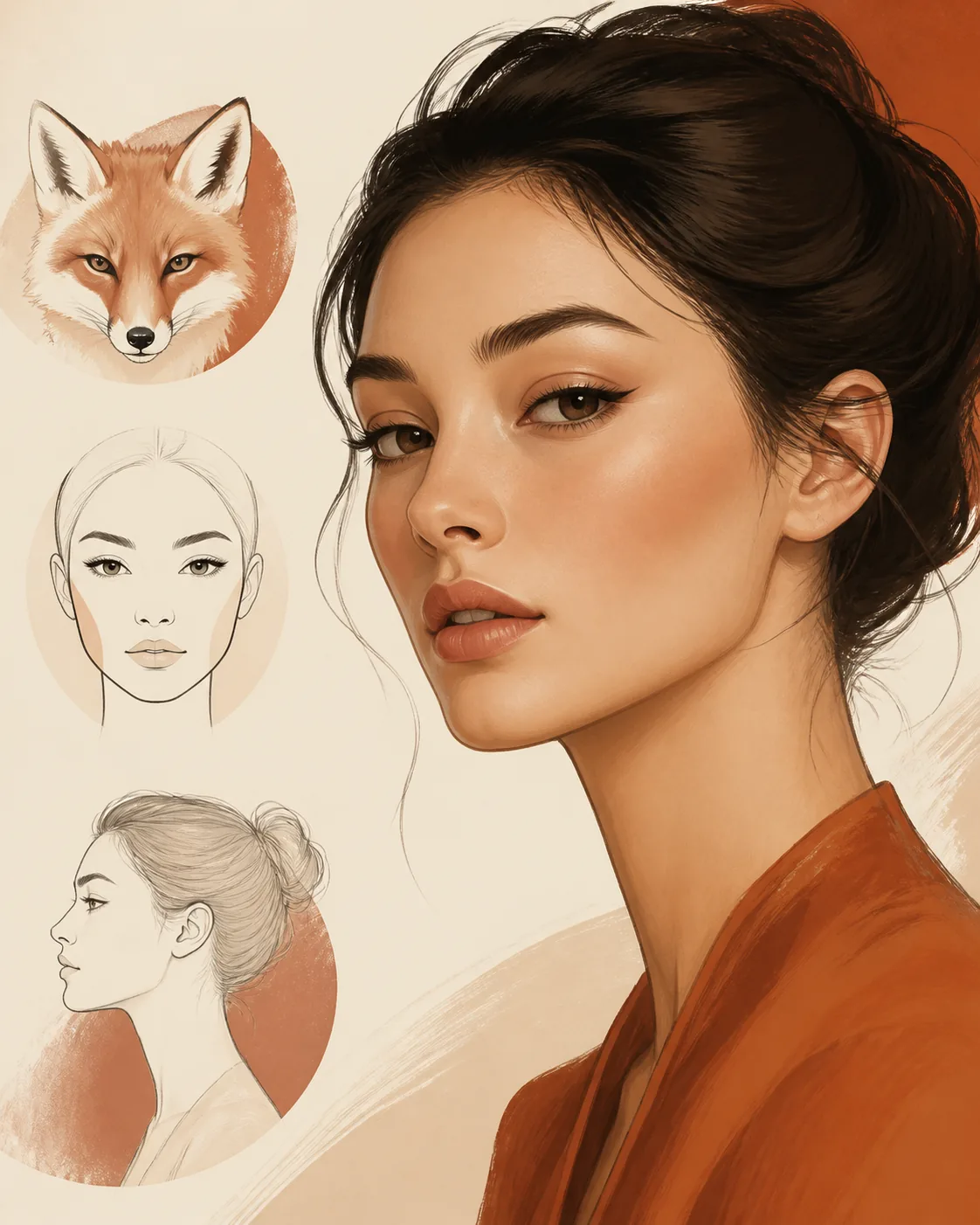
In beauty language, fox face type does not mean literally looking like a fox. It describes a visual impression created by several features working together: directional eyes, a narrow or slightly elongated outline, a defined lower face, and an alert expression. One eye shape alone is not enough.
This guide is narrower than the site's animal face types explained page and broader than the fox eye shape guide. It focuses on the full fox face type, how to self-check it, why fox and cat are often confused, and how to read an AI animal face result without treating the label as a fixed identity. For a focused side-by-side comparison, continue to fox face shape vs cat face.
What Does Fox Face Type Mean?
Fox face type is a style-based label for a face that reads sleek, narrow, directional, and a little more enigmatic than openly cute. The impression can feel alert, elegant, clever, intense, or quietly dramatic depending on the expression and styling.
The label is common in Korean animal face type discussions and in beauty content that compares cat, fox, deer, puppy, rabbit, and tiger impressions. It compresses a group of visible cues into one memorable image, but it is not an official scientific classification. Different communities may use the label slightly differently.
A useful fox face reading should look at the relationship between the eyes, cheekbones, jaw, nose line, and face length. Lifted eyes with a very short round face may read cat or squirrel instead. A long face with large gentle eyes may read deer or horse. The whole pattern matters more than the most dramatic feature.
- Core meaning: a narrow, directional, refined, and alert facial impression.
- Best-fit intent: understanding a style label, not diagnosing personality or ranking beauty.
- Common search variants: fox face beauty type, fox face shape human, fox vs cat face type, and fox face type makeup.
How to Tell If You Have a Fox Face Type
Start with a neutral, front-facing photo before applying makeup or filters. Fox face type often has some direction at the outer eye, a lower face that feels narrower or longer, and an expression that reads observant or composed rather than very open and round.
Next, check the outline from the cheeks to the chin. A fox impression becomes stronger when the face has a clean vertical flow, a tapered jaw, or cheekbone definition that makes the face look more sculpted. The line does not have to be extremely sharp; subtle structure can still create the impression.
Finally, compare the softness of the center face. If your cheeks are very round, your eyes are large and gentle, and your expression feels openly warm, puppy, rabbit, or deer may be a better base type. If the same directional eyes sit on a shorter, more balanced face, cat may be the closer match.
| Feature | Fox-leaning signal | May point elsewhere |
|---|---|---|
| Eyes | Lifted, slanted, almond, or focused outer corners | Very round and open eyes may lean deer, rabbit, or puppy |
| Face outline | Narrow, tapered, or slightly elongated vertical line | Short and soft outline may lean cat, rabbit, or squirrel |
| Cheekbones | Visible planes or a cleaner side profile | Full, soft cheeks may lean puppy or rabbit |
| Jaw and chin | Tapered, defined, or subtly pointed lower face | Broad softness may lean dog; very long lower face may lean horse |
| Expression | Alert, composed, knowing, or quietly intense | Open warmth may lean puppy; graceful softness may lean deer |
Fox Face Type vs Cat, Deer, Tiger and Fox Eye Shape
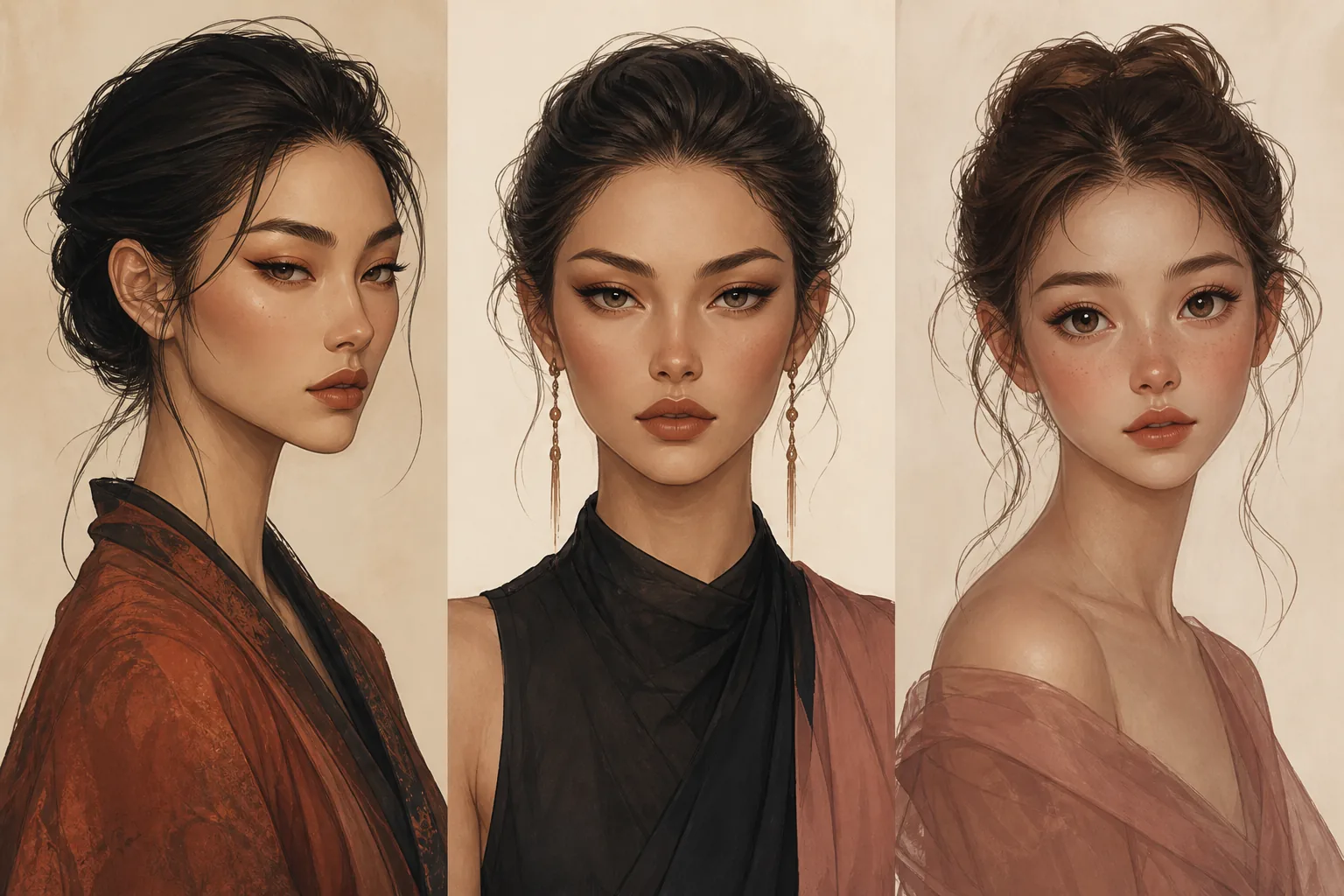
Fox is most often confused with cat because both can include lifted eyes and a sleek impression. The practical difference is the full-face rhythm. Fox usually feels more elongated, narrower, and sharper through the outline, while cat often feels more balanced, polished, and compact. Neither label requires one exact eye shape.
Deer is a different kind of delicacy. Deer face type usually reads larger-eyed, gentler, more open, and more softly elongated. Tiger can share fox's focus and definition, but tiger generally has stronger visual power, heavier structure, or a more commanding expression.
Fox eye shape is narrower again: it describes the eye area, not the entire face. A person can have fox-like eyes with a deer, cat, or puppy face impression. Keeping those terms separate prevents a single makeup-created eye angle from becoming an overconfident whole-face label.
| Type | Main cue | How it differs from fox |
|---|---|---|
| Fox face | Narrow, directional, slightly elongated, alert | The reference pattern for this guide |
| Cat face | Lifted, refined, defined, and balanced | Usually less elongated and less mysterious |
| Deer face | Large gentle eyes, delicate softness, open expression | Softer and less sharp through the outline |
| Tiger face | Strong structure, intensity, and commanding presence | More powerful or bold rather than quietly sly |
| Fox eye shape | One eye-area signal | Does not describe cheeks, jaw, face length, or overall mood |
Fox Face Type Makeup and Styling Cues
Fox face type makeup works best when it follows the face's natural direction. A softly extended outer liner, controlled brow shape, and light contour along the cheek or jaw can emphasize the impression without turning the face into a costume. The goal is a cleaner visual line, not maximum sharpness.
For photos, use soft side light or an evenly lit window instead of a harsh overhead source. Strong shadows can make any face look more angular, while a wide-angle selfie can exaggerate the center face and shorten the apparent proportions. Test makeup and camera changes separately so you know what actually changed the result.
Mixed types need balance. Fox-cat blends can handle cleaner edges and a more lifted liner. Fox-deer blends often look better with a softer cheek and lighter lower-eye detail. Fox-puppy blends can keep the eye direction while preserving warmth in the cheeks and expression.
- Follow the natural outer-corner direction instead of drawing a completely new eye.
- Keep brows defined but avoid a hard block that overwhelms the face.
- Use light contour under the cheekbone or jaw; stop before the face looks hollow.
- Try sleek hair, a clean part, or a softly pulled-back style for a clearer outline.
- Keep one soft element when your base type is mixed with deer, puppy, or rabbit.
How to Read Fox in an AI Animal Face Result
An AI animal face result is most useful when it explains why fox appears. Look for notes about eye direction, facial length, cheekbone definition, jaw taper, or an alert expression. A label without a reason is much less useful than a primary match plus the secondary signals behind it.
Do not treat the score as a permanent identity. If fox is close to cat, the photo may show shared lifted eyes and refined lines. If fox is close to deer, the tool may be balancing directional eyes with softer proportions. If tiger is nearby, stronger structure or expression may be contributing to the result.
For a clean baseline, use a front-facing photo in natural light with minimal filters and hair away from the eyes and jaw. You can then compare the result with the site's animal eye type guide, the animal face shapes guide, and the broader face type chart.
Mixed Types, Photo Limits and What Not to Overread
Fox face type is a descriptive framework, not a fixed identity. Lighting, camera distance, makeup, hair, expression, and cultural expectations can all change how narrow, sharp, or mysterious a face appears. A single dramatic photo should not outweigh a consistent pattern across several neutral photos.
Mixed results are normal. A face can have fox-like eyes, cat-like balance, deer-like delicacy, and tiger-like structure at the same time. The most honest answer may be fox as a secondary signal rather than a single pure category. That does not make the result less useful; it explains why different people may describe the same face differently.
Use the label for style exploration and clearer photo interpretation. Do not use it to rank attractiveness, infer personality, or decide what someone should look like. If a label feels uncomfortable, keep the concrete feature description and drop the animal name.
Check whether fox is your strongest animal face signal
Use this full-face checklist first, then upload a clear photo to compare your fox score with cat, deer, tiger, puppy, rabbit, and the rest of the 9-animal system.
Fox face type FAQ
Research notes
-
Animal Face Test GSC opportunity reviewThe only 10-30 position opportunity was the homepage query what animal do I look like; the homepage is protected and the query is already served by the tool plus an existing look-alike guide.
-
Similarweb keyword generatorPhrase match, related keywords, and question keywords were checked. Fox face type and fox face beauty type were kept on one entity page, while the fox-versus-cat question became a comparison section and FAQ.
-
Animal Face Types ExplainedThe broader internal guide is used for the site taxonomy and general animal face type definitions.Read the broader guide
-
Fox Eye ShapeThe existing eye-specific page is linked to keep fox eye shape separate from the full fox face type intent.Read the eye-shape guide