Doe Eyes Meaning: How to Tell If You Have the Soft Deer-Eye Look
A practical guide to what doe eyes mean, how to spot them on a human face, and how they fit deer, rabbit, puppy, cat, and fox animal face type results.

Editorial Note
Doe eyes are a beauty-language and animal face type cue, not a medical, personality, or attractiveness diagnosis. Use the term as a light way to describe facial impression.
Quick Answer
- Doe eyes usually mean soft, open, rounded eyes that make a face feel gentle, innocent, or deer-like.
- The strongest clues are vertical eye openness, relaxed lower eyelids, soft brows, and a calm gaze.
- Doe eyes often support deer face type, but they can mix with rabbit, puppy, cat, or fox signals.
- Doe eyes vs almond eyes comes down to round openness versus longer tapered shape.
- Use more than one photo because lighting, expression, makeup, and camera angle can change the result.
If you searched doe eyes meaning, you are probably trying to name a soft, wide-eyed look that feels gentle or deer-like. In beauty language, doe eyes describe eyes that appear open, rounded, calm, and emotionally expressive.
On this site, the phrase also matters because doe eyes can influence an Animal Face Test result. The signal often supports deer face type, but it can also overlap with rabbit, puppy, cat, or fox depending on the rest of the face.
This guide keeps the scope narrow: it explains the eye cue itself, then shows how to compare it with whole-face animal type results.
What Does Doe Eyes Mean?
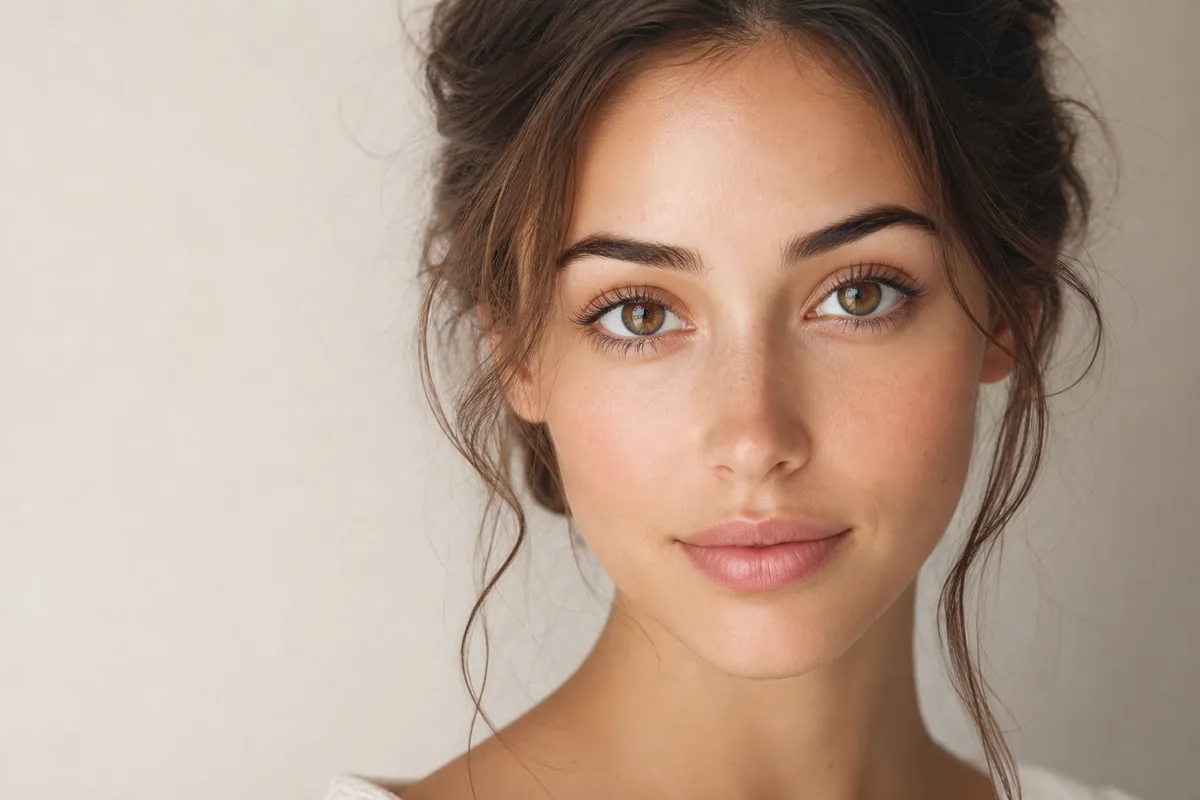
Doe eyes means a wide, soft, open-eyed look that feels gentle, innocent, or quietly expressive. The phrase comes from the impression of a deer or doe: large-looking eyes, a calm gaze, and a delicate overall feeling.
In beauty and animal face type language, doe eyes are not just “big eyes.” The meaning comes from a cluster of clues: rounded eye opening, visible iris space, soft lower eyelids, gentle brow tension, and a face impression that reads warm rather than sharp.
That is why doe eyes meaning is a separate search intent from a full animal face type test. A person can have doe-eye signals without being a pure deer face type, and a deer face result can include other clues such as face length, cheek softness, and graceful proportions.
- Everyday meaning: soft, gentle, wide-eyed, or innocent-looking eyes.
- Face-reading meaning: rounder open eyes plus relaxed brow and eyelid cues.
- Animal face meaning: a strong support signal for deer face, and sometimes rabbit or puppy mixes.
How to Know If You Have Doe Eyes
Start by looking at the eye opening in a neutral photo. Doe eyes usually look vertically open and rounded, with a gaze that feels soft rather than narrow, lifted, or intense. The eyes do not need to be extremely large; they need to create a gentle open impression.
Next, compare the eyelids and brows. A relaxed lower lid, visible iris area, and softly curved brows make the doe-eye effect stronger. Heavy squinting, very sharp outer corners, or strong upward flicks usually move the impression toward cat or fox instead.
Finally, check the full face context. Doe eyes often pair with a delicate nose bridge, soft cheeks, and a longer or graceful face line. If the rest of the face is compact and cute, rabbit may be a secondary signal; if it is warm and pleading, puppy may appear.
| Signal | What to check | What it suggests |
|---|---|---|
| Eye opening | Rounded and vertically open | Soft, gentle, deer-like impression |
| Iris visibility | Enough visible iris and eye white without a hard stare | Open and expressive look |
| Lower eyelid | Relaxed rather than tight | Low-intensity softness |
| Brow line | Smooth curve or mild inner lift | Innocent or tender feeling |
| Whole face | Delicate cheeks, graceful face line, calm expression | Deer face or deer-adjacent animal signal |
Where Doe Eyes Fit in Animal Face Types
Doe eyes most naturally support the deer face type because both ideas share softness, grace, and an expressive gaze. On this site, deer face is a whole-face category, while doe eyes are one visible clue inside that broader reading.
The same eye signal can also appear in mixed results. A person with doe eyes and rounded cheeks may read deer-rabbit. Doe eyes plus warm brows and a soft smile can read deer-puppy. Doe eyes with a sharper jaw or lifted outer corner may become deer-cat or deer-fox instead.
For a broader overview, compare this guide with the animal eye type guide, the animal face type chart, and the animal face types explained article.
Deer face
Doe eyes are one of the clearest deer-face clues when the whole face also feels gentle and graceful.
- Signature features: Open rounded eyes, soft gaze, delicate outline.
- Overall impression: Gentle, elegant, approachable.
- Often confused with: Rabbit face, puppy face, soft cat face.
Rabbit face
Rabbit mixes happen when doe-like eyes sit on a shorter, cuter, rounder face structure.
- Signature features: Round eyes, soft cheeks, compact proportions.
- Overall impression: Bright, cute, youthful.
- Often confused with: Deer face and puppy face.
Puppy face
Puppy overlap appears when the eyes feel warm, pleading, and emotionally open.
- Signature features: Soft eyes, inner-brow lift, friendly smile.
- Overall impression: Warm, loyal, easy to approach.
- Often confused with: Deer face and rabbit face.
Cat or fox face
If the eyes are open but the outer corners and jawline look sharper, the result may shift away from pure doe softness.
- Signature features: Lifted corners, defined cheekbones, sharper lines.
- Overall impression: Polished, alert, composed.
- Often confused with: Deer-cat or deer-fox mixed readings.
Doe Eyes vs Almond Eyes: The Practical Difference
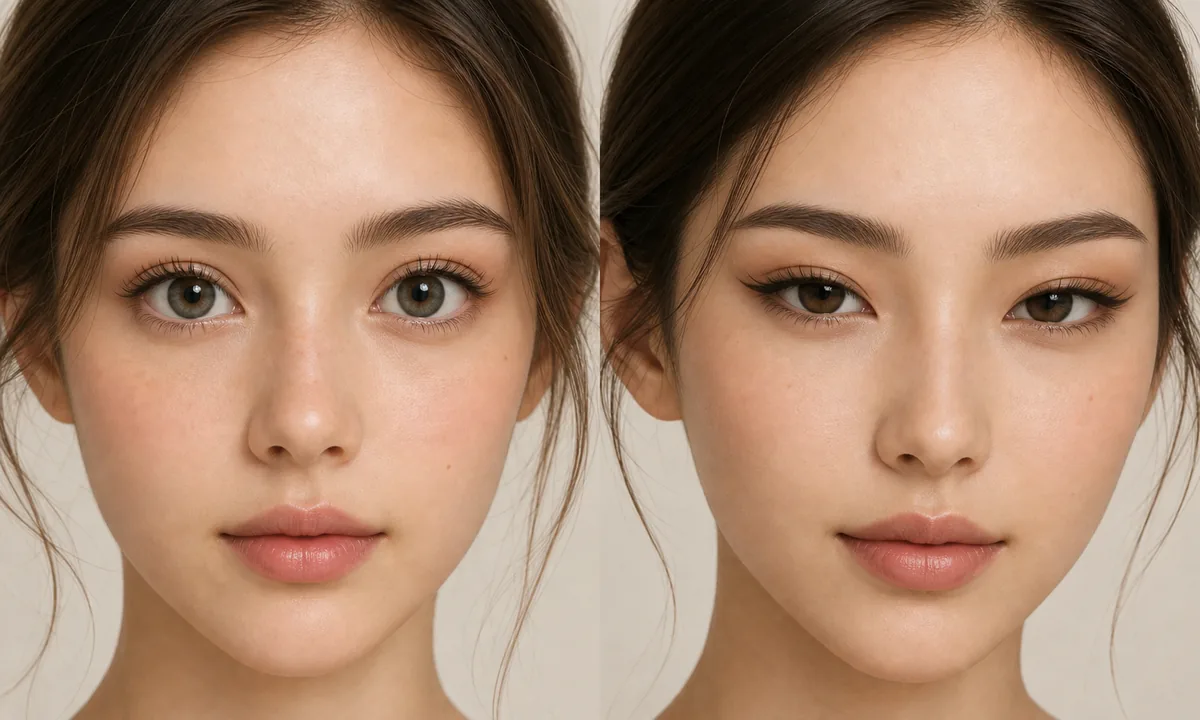
Doe eyes vs almond eyes is a useful comparison because both can be attractive, expressive, and common in animal face readings. The difference is shape direction. Doe eyes emphasize openness and roundness. Almond eyes emphasize length, taper, and a more defined outer corner.
Almond eyes often support cat face or fox face impressions when the gaze is lifted or sleek. Doe eyes more often support deer, rabbit, or puppy impressions when the gaze is soft and vertically open. Many people sit between the two, especially if makeup, camera angle, or expression changes the outer-eye line.
Use the comparison as a guide, not a rule. A neutral selfie may show almond structure, while a softer expression can create a doe-eye impression. That is why an AI result should explain the feature signals instead of only giving a single label.
| Feature | Doe eyes | Almond eyes |
|---|---|---|
| Main shape | Rounder and more vertically open | Longer, tapered, and horizontally balanced |
| Outer corner | Soft or neutral | More defined, sometimes lifted |
| Typical impression | Gentle, innocent, tender | Polished, elegant, composed |
| Common animal fit | Deer, rabbit, puppy | Cat, fox, tiger-adjacent |
| Photo sensitivity | Stronger with soft light and relaxed brows | Stronger with eyeliner, angle, and lifted expression |
Photo and Makeup Clues That Change the Doe-Eye Effect
A photo can make doe eyes look stronger or weaker. Soft frontal light, visible catchlights, a relaxed mouth, and a slight upward camera angle often make the eyes appear larger and more open. Harsh shadows, squinting, and a low camera angle can reduce the effect.
Makeup also changes the read. Rounded liner, curled lashes, and bright inner corners can make the eye area look more open. A long wing, dark outer corner, or strong lifted liner can move the same eyes toward cat or fox. Neither is better; they simply communicate different visual signals.
For the cleanest animal face reading, use one neutral front-facing photo and one natural-smile photo. If both show a soft open gaze, doe-eye signals are probably part of your stable face impression.
- Use natural light and keep the camera close to eye level.
- Avoid beauty filters that enlarge eyes or reshape the jaw.
- Take one neutral photo and one relaxed-smile photo.
- Keep hair away from the brows and outer eye corners.
- Compare the eye signal with face shape before deciding the animal type.
How to Read Doe Eyes in an AI Animal Face Result
If an AI animal face result says deer, rabbit, or puppy, check whether the explanation mentions soft open eyes, gentle gaze, delicate proportions, or relaxed expression. Those details tell you whether doe eyes were part of the reasoning.
A good result should not treat doe eyes as a personality diagnosis or beauty score. It should describe visible facial signals and show how they combine with cheeks, jawline, face length, and expression. The label is useful only when the feature explanation makes sense.
To compare manual and AI readings, try the Animal Face Test, then use this checklist to see whether the result matches what you notice in your own photos.
Compare Your Doe-Eye Signal With an Animal Face Result
Use the manual checklist first, then upload a clear photo to see whether the AI reads your eyes as deer, rabbit, puppy, cat, or another mixed animal face type.
Doe Eyes FAQ
Research and Source Notes
-
Animal Face Test GSC opportunity reviewInternal Search Console review found no 10-30 position opportunity with enough impressions, so this page was selected from Similarweb keyword-generator validation.
-
Similarweb keyword generator validationPhrase match and related tabs showed doe eyes meaning as a distinct informational query with low difficulty and strong search volume. Question and comparison variants shaped the FAQ and comparison section.
-
Animal Face Test editorial taxonomyInternal taxonomy compares eye-shape signals with deer, rabbit, puppy, cat, fox, and mixed animal face type readings.Read the animal eye type guide