Animal Look Alike Guide: How to Tell What Animal You Look Like
A practical way to read your animal look alike from facial structure, expression, photo setup, and mixed animal face type signals before you use an AI test.
Editorial Note
Animal look alike results are style-language and entertainment, not a scientific identity, medical assessment, or beauty ranking. The goal is to describe facial impressions in a useful, low-pressure way.
Quick Answer
- Your animal look alike is usually decided by a cluster of clues, not one feature alone.
- Eyes start the read, but face length, jawline, cheek volume, and expression often decide the final match.
- Most people are mixed animal face types, so a primary plus secondary match is more realistic than a single label.
- Use a clear front-facing photo before judging your result. Angles, filters, hair, and makeup can shift the animal impression.
- An AI animal face test is most helpful after you understand what the result is comparing.
If you searched animal look alike or which animal do I look like, you probably want a direct answer. The useful answer is a pattern of visible features—not just a cute label—that explains why your face may read cat-like, puppy-like, deer-like, rabbit-like, tiger-like or mixed.
This guide stays on the explanation side of the topic. The homepage Animal Face Test is the photo tool for an animal lookalike test; this page explains how to compare primary and secondary results and why a clear photo matters.
The topic is a good fit for a guide because GSC shows the site already ranking around the second page for animal look alike searches, while Similarweb reports meaningful keyword demand for the broader animal look alike and animal face type cluster. The page stays informational so it supports the test page instead of competing with it.
What Does Animal Look Alike Mean?
An animal look alike is a visual shorthand for the way your facial features combine into an impression. It does not mean you literally resemble an animal in every detail. It means your eyes, outline, jawline, cheek fullness, nose shape, and expression create a familiar pattern people can describe with an animal archetype.
That is why animal look alike language became popular in beauty and self-description content. Saying someone has a cat face immediately suggests lifted eyes, cleaner facial lines, and a polished or slightly mysterious mood. Saying someone has a puppy face suggests softer eyes, warmth, openness, and approachability. The label compresses several clues into one memorable image.
For SEO and user intent, this matters because animal look alike searches often sit between curiosity and action. Some people want a quiz. Some want a photo upload test. Others want to understand the difference between similar labels before trusting a result. This guide serves the middle step.
- Use the label as a description of facial impression, not as a fixed identity.
- Expect overlap between neighboring types such as cat and fox, rabbit and puppy, or deer and horse.
- Look for the type that explains the most visible clues across several photos.
Fast Self-Check: What Animal Do You Look Like?
Use this table as a first pass before you upload a photo. It will not replace the AI test, but it helps you understand what the test is likely to notice. Start with a relaxed, front-facing photo in natural light, then choose the row that fits most of your face rather than the label you like best.
The key is to compare clusters. Large eyes alone do not automatically mean deer. Sharp eyes alone do not automatically mean cat. Your animal look alike comes from the relationship between the eyes, face outline, lower face, and overall mood.
| If your face mostly reads... | Possible animal look alike | What to check next |
|---|---|---|
| Strong, intense, angular, and visually powerful | Tiger | Check brow strength, jaw definition, and overall facial impact |
| Expressive, playful, animated, and social | Monkey | Check smile energy, cheek movement, and lively expressions |
| Warm, soft, friendly, and approachable | Dog or puppy | Check rounder eyes, gentle cheeks, and a relaxed smile |
| Small-featured, alert, delicate, and bright | Squirrel | Check compact proportions, small nose, and bright eyes |
| Round, soft, gentle, and extra cute | Piggy or rabbit-adjacent softness | Check cheek fullness and rounded lower-face structure |
| Large-eyed, graceful, delicate, and gentle | Deer | Check face length and whether the softness feels elegant |
| Lifted, sleek, defined, and polished | Cat | Check almond eyes, cheekbone definition, and sharper lower face |
| Longer, refined, vertical, and elegant | Horse | Check face length, nose line, and elongated proportions |
| Bright, youthful, sweet, and round-eyed | Rabbit | Check short soft outline, cheeks, and a cute smile |
The Facial Clues That Matter Most
The strongest animal look alike results usually start with the eyes. Round and open eyes often push a face toward dog, rabbit, or deer. Lifted almond eyes often push a face toward cat or tiger. Long gentle eyes can support deer or horse depending on the face outline. Very lively eyes can support monkey or squirrel when the rest of the face also feels animated or compact.
Face outline is the second filter. A short, soft outline makes cute and approachable animal matches more likely. A longer outline pushes the result toward deer, horse, or fox-like interpretations, depending on whether the lines feel gentle, elegant, or sharp. A balanced but defined outline often supports cat.
Jawline and cheek volume are the tie-breakers. Soft cheeks and a rounded jawline support dog, rabbit, or piggy. A cleaner lower face supports cat. A longer lower face supports horse. A delicate slim lower face can support deer. A strong jawline and bold structure can support tiger.
Expression also matters. A warm smile can move the same face toward dog. A bright smile can make it feel more rabbit-like. A composed expression can make it feel more cat-like. This is one reason a photo-based result can vary: the underlying structure stays the same, but the visible mood changes.
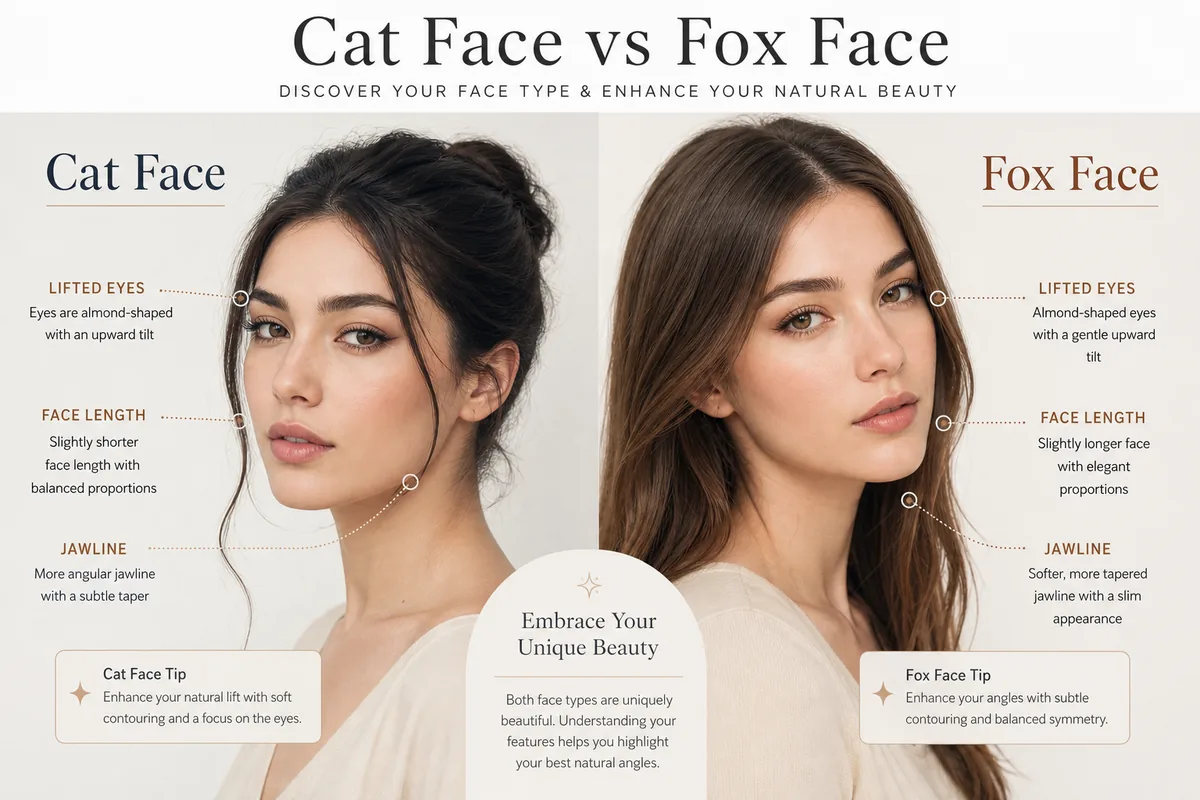
- Eyes: round, droopy, lifted, long, gentle, intense, or animated.
- Outline: compact and soft, balanced and defined, or long and vertical.
- Jawline: rounded, delicate, clean, pointed, or strong.
- Cheeks: full and youthful, light and delicate, or cleaner and sharper.
- Expression: warm, cute, elegant, polished, powerful, or playful.
Why Your Animal Look Alike May Be Mixed
Mixed animal look alike results are not a problem. They are usually more honest than a single perfect label. Real faces rarely match one archetype exactly. You might have cat-like eyes with deer-like softness, dog-like warmth with rabbit-like cheeks, or horse-like length with cat-like definition.
A useful result should show a primary match and secondary signals. The primary match explains the strongest pattern. The secondary match explains the feature that keeps the result from feeling pure. This is why percentage-style results often feel more accurate than one-word quiz answers.
When you read a result, ask what each match is explaining. If your top result is cat but deer is close behind, the tool may be seeing lifted definition plus large gentle eyes. If dog and rabbit are both high, it may be reading warmth and cuteness together.
| Mixed result | What it usually means | How to interpret it |
|---|---|---|
| Cat + Deer | Defined or lifted features with large gentle eyes | Polished first impression, softened by delicate eye energy |
| Dog + Rabbit | Warm approachable softness plus youthful cuteness | Friendly base type with a sweeter, brighter secondary mood |
| Tiger + Cat | Strong structure with sleek lifted details | Powerful impression that still reads elegant and defined |
| Horse + Deer | Longer face proportions with gentle or graceful features | Elongated structure, but softer than a purely bold type |
| Squirrel + Rabbit | Compact delicate features with bright cuteness | Small-featured and youthful rather than broad or intense |
Photo Quality Can Change Your Animal Look Alike
Animal look alike tests are sensitive to the photo you provide. A high-angle selfie can shorten the face and make rabbit or puppy traits look stronger. A low-angle photo can lengthen the lower face and push the result toward horse or tiger. A wide-angle lens can exaggerate the nose and center face. Heavy filters can blur the jawline and cheeks.
For the cleanest baseline, use one front-facing photo with soft natural light. Keep the camera at eye level, remove hair from the brow and jawline, and use a relaxed expression. Then test a second photo with a soft smile. If the same primary animal appears in both, that is probably your strongest look alike. If the result changes, compare what changed: expression, angle, makeup, hair, or lighting.
This is also why an AI result should not be treated as a final truth. It is a structured reading of the visible image. Better input produces a better interpretation.
- Use natural light instead of harsh overhead light.
- Keep the camera at eye level to avoid face-shape distortion.
- Avoid heavy filters for your first result.
- Keep hair away from your eyes, cheeks, and jawline.
- Compare two photos before deciding your animal look alike.
How to Read an AI Animal Look Alike Result
A good AI animal look alike result should do more than name one animal. It should show percentages or secondary matches, then explain the features that drove the result. That explanation is what makes the output useful. Without it, the label can feel random.
On this site, the Animal Face Test compares your photo with 9 animal face type patterns. Read the highest percentage as the primary match, then use the secondary matches to understand nearby signals—for example, a cat result with deer overlap can combine sharper eyes with a softer overall impression.
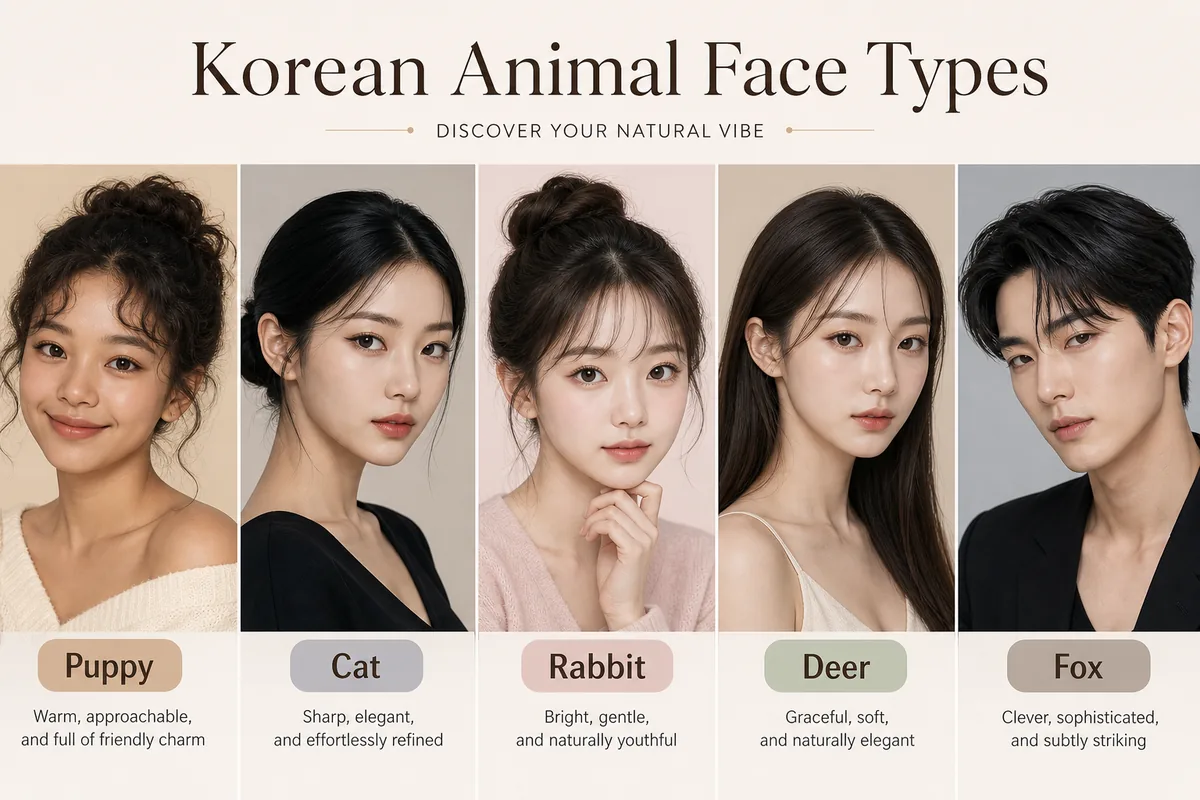
If you want a broader manual overview before testing, read Animal Face Types Explained. If you are specifically comparing Korean beauty labels like puppy, cat, rabbit, deer, and fox, use the Korean animal face type self-check first.
What to Do After You Know Your Animal Look Alike
Once you know your animal look alike, use it as a styling clue, not a box. A cat-like result may explain why lifted liner, sleek hair, or sharper styling feels natural. A deer-like result may explain why soft eye emphasis and lighter textures work well. A dog or rabbit result may point toward warm, fresh, approachable styling. A tiger result may support bolder contrast and stronger shapes.
You can also use the result to compare photos more intelligently. If your top match changes, look at the photo conditions first. Did your face look shorter because of the angle? Did your eyes look more lifted because of makeup? Did your smile pull the result toward a softer type? These observations are more useful than arguing with the label.
The best next step is to test one clear photo, then read the explanation instead of focusing only on the animal name. If the result feels close but not perfect, check your secondary match. That second type often explains the nuance.
- Use your result to understand styling direction and photo impressions.
- Read secondary matches when the top label feels incomplete.
- Try the Animal Face Type Quiz if you prefer a quiz-style path before photo upload.
- Use the homepage tool when you want the fastest photo-based answer.
Ready to Find Your Animal Look Alike?
Use the guide to understand the clues, then upload one clear front-facing photo to compare your primary animal match with secondary signals.
Frequently Asked Questions
References and Further Reading
-
Animal Face Test internal GSC dataUsed to identify animal look alike as a second-page opportunity query cluster with a homepage ranking signal.
-
Similarweb keyword dataUsed as directional validation for animal look alike and animal face type demand in the recent keyword window.
-
Animal Face Types ExplainedInternal guide used for the broader animal face type framework and classic archetype definitions.Read the guide
-
Korean Animal Face Type Self-CheckInternal guide used for self-check logic around puppy, cat, rabbit, deer, and fox face clues.Read the self-check