Animal Pretty Types: How to Read Cat, Bunny, Deer, Fox and Puppy Beauty Impressions
A practical, non-judgmental guide to the animal pretty trend: what each label means, how it connects to animal face types, and how to use it without turning beauty into a rigid score.

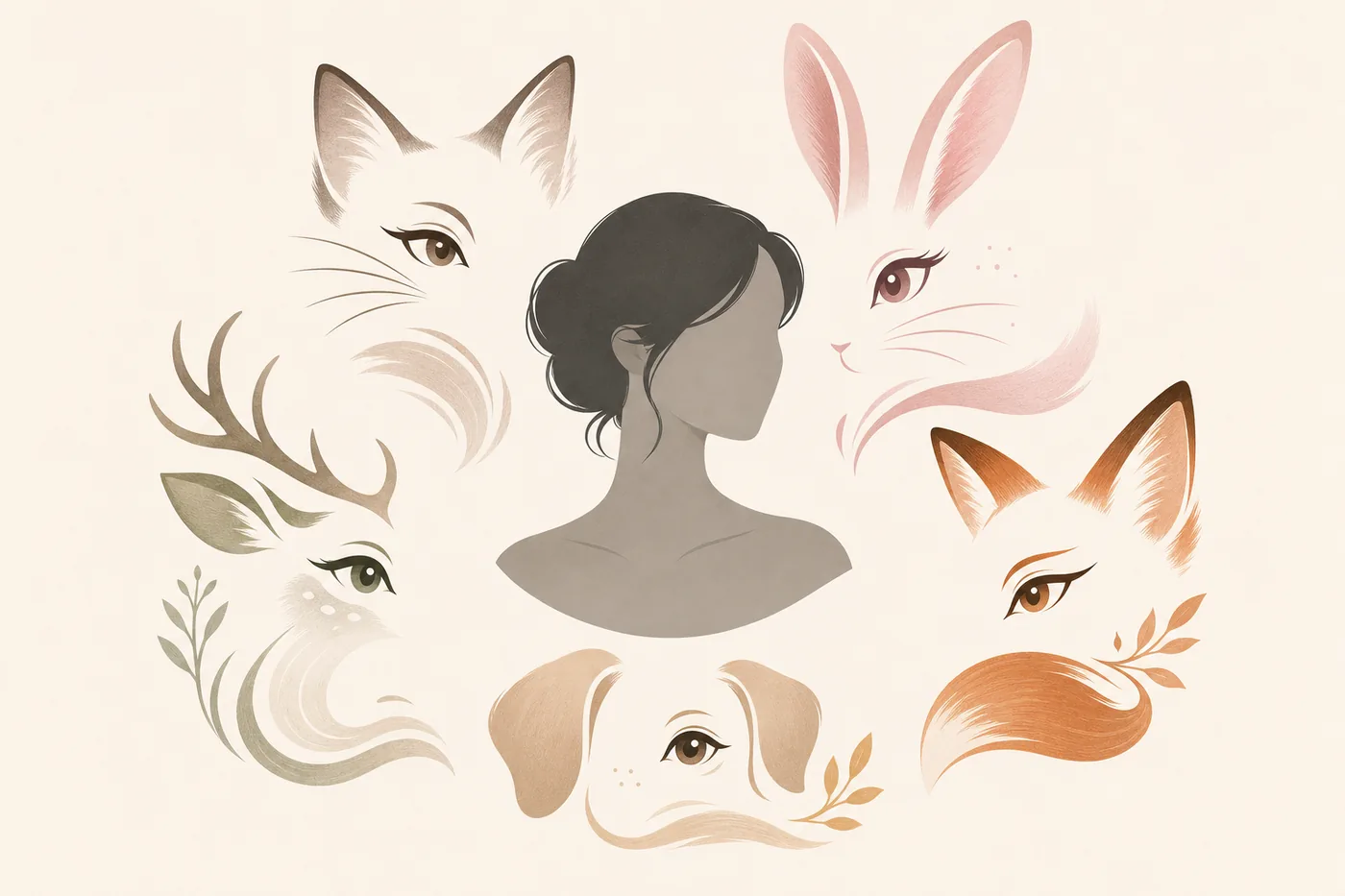
Editorial note
Animal pretty types are entertainment and style vocabulary. They should not be used to rank attractiveness, judge identity, or make claims about personality.
Quick answer
- Animal pretty types are beauty-language labels such as cat pretty, bunny pretty, deer pretty, fox pretty, and puppy pretty.
- They overlap with animal face type, but they focus more on impression, styling, and visual mood than on a quiz result.
- Cat and fox usually read sharper; bunny and puppy read softer; deer reads gentle and graceful.
- Most people are mixed types, so a useful result is usually a primary impression plus one or two secondary cues.
- Use the labels for makeup, photo, and style exploration, not as a beauty hierarchy.
Searches like animal pretty types, animal beauty types, and what type of animal pretty am I usually come from the same place: people see cat, bunny, deer, fox, or puppy pretty on TikTok, Pinterest, or Korean-beauty content and want a clearer explanation.
This guide separates the trend from the test. The Animal Face Test compares visible facial cues with animal face types, while animal pretty language adds a softer styling layer: the mood your features, makeup, expression, and photo angle create together.
Keyword decision note: GSC did not justify a new page from 10-30 position data. Similarweb keyword generator was checked across phrase match, related keywords, and question keywords; the specific animal pretty seed returned too little tab data, so Semrush fallback supplied the directional volume and KD used for this page.
What Does Animal Pretty Types Mean?
Animal pretty types are playful beauty archetypes. Instead of saying a face is simply round, sharp, cute, elegant, or warm, the trend groups those impressions into animal labels. Cat pretty usually feels sleek and refined. Bunny pretty feels bright and sweet. Deer pretty feels gentle and graceful. Fox pretty feels sharper and more mysterious. Puppy pretty feels warm, open, and approachable.
The phrase is close to animal face type, but not identical. Animal face type asks what animal your features resemble. Animal pretty type asks what kind of beauty impression those features create after expression, styling, and makeup are considered. That is why the same person can be deer face with bunny pretty styling, or cat face with fox pretty energy.
- Animal face type: feature-based reading, often tied to eyes, face shape, cheeks, jawline, and proportions.
- Animal pretty type: impression-based reading, often tied to the mood created by features plus styling.
- Best use: makeup references, photo angle ideas, and self-description.
- Worst use: ranking people, forcing a label, or treating a trend as objective beauty analysis.
How to Find Your Animal Pretty Type Without Overthinking It
Start with a neutral photo and a natural-light photo where you feel like yourself. Look at the first impression before you zoom into details. Does the face read sleek, sweet, delicate, mysterious, or warm? Then check whether the eyes, cheeks, lower face, and expression support that first read.
Do not choose the label you wish you had. Choose the label that helps explain your actual visual pattern. If two labels both fit, keep both. Mixed results are normal, especially between cat and fox, bunny and puppy, deer and bunny, or deer and cat.
| Question | What to look for | Likely action |
|---|---|---|
| What is the first mood? | Sleek, cute, gentle, mysterious, or warm | Pick the nearest primary type. |
| What do the eyes do? | Lifted, round, open, soft, sharp, or friendly | Use the eyes as a strong but not final clue. |
| What does the lower face add? | V-line, round cheeks, longer softness, compact cuteness | Separate cat/fox from bunny/puppy/deer. |
| Does styling change the read? | Liner, blush, hair, lighting, and expression | Keep structure and styling as separate layers. |
Animal Pretty Types Map: Cat, Bunny, Deer, Fox and Puppy
The five-type map below keeps the trend practical. It does not cover every possible label, but it covers the search patterns people use most often when they ask about animal beauty types and animal pretty tests.
Use the table as a comparison layer before taking the AI test. It helps you decide whether your result should be read as a pure type or as a blend.
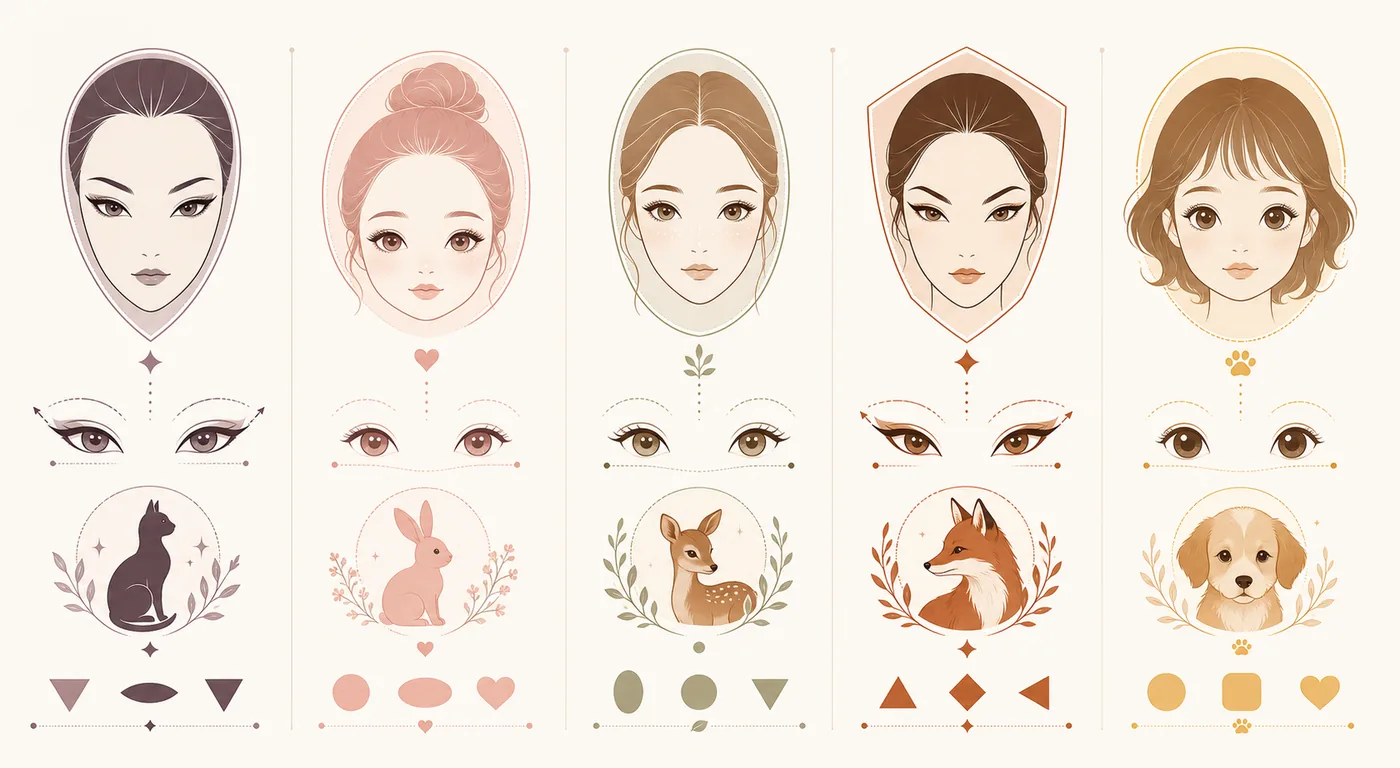
| Type | Main beauty impression | Often confused with |
|---|---|---|
| Cat pretty | Sleek, refined, lifted, composed | Fox when the face becomes longer or more mysterious |
| Bunny pretty | Bright, youthful, sweet, rounder | Puppy when the impression is warmer than doll-like |
| Deer pretty | Gentle, graceful, delicate, airy | Bunny when the eyes are large but the face is shorter |
| Fox pretty | Sharp, directional, elegant, mysterious | Cat when the face is lifted but less elongated |
| Puppy pretty | Friendly, warm, open, approachable | Bunny or deer when the eyes are large and soft |
How to Use Animal Pretty Types With the AI Animal Face Test
The AI test is best used after you understand the vocabulary. Upload one clear, front-facing photo first. If the result says cat but your everyday style feels softer, check whether cat is the structure and bunny, deer, or puppy is the beauty mood. If the result says deer but your styled photos look sharper, fox or cat may be a secondary impression.
A good result is not just one word. Look at the explanation, nearby matches, and the features that created the score. Then compare that with the Animal Face Type Chart, the Cat Face Type guide, and the Doe Eyes Meaning article if those cues appear. If the pattern looks long and steady, continue with the Snake Face Type guide.
- Use a clear front-facing photo before testing styled photos.
- Read secondary matches as useful clues, not mistakes.
- Separate structure from styling: face type can stay stable while pretty type shifts with makeup and expression.
- Avoid filters that enlarge eyes, narrow the jaw, or reshape the face.
Limits, Mixed Types and a Healthier Way to Use the Trend
Animal pretty types can be fun because they give language to a visual impression that is hard to describe. They become less useful when they turn into a beauty ranking. Current SERP results include playful quizzes, makeup guides, social posts, and critique pieces, which shows that users want both identification and safer framing.
Treat the label as a style reference, not a verdict. If cat pretty helps you choose a liner shape, use it. If bunny pretty makes a blush placement easier to explain, use it. But no label should make you feel less attractive, less feminine, less masculine, or less yourself.
- Keep mixed labels when they explain the face better.
- Use the trend for styling experiments, not self-criticism.
- Do not compare people by pretending one animal label is more beautiful than another.
- If a trend makes you feel worse about your face, step away from it.
Compare your animal pretty impression with the AI result
Use this guide to choose your likely primary and secondary pretty types, then run the free Animal Face Test to compare that impression with feature-based AI signals.
Animal pretty types FAQ
Research notes
-
Similarweb keyword generatorPhrase match, related keywords, and question keywords were checked for candidate seeds. The stronger Similarweb records mapped to already-covered animal face type and test intent, while animal pretty seeds returned too little tab data for a Similarweb-only decision.
-
Semrush Keyword Magic fallbackUsed as fallback because Similarweb lacked usable exact records. It showed animal pretty types, animal beauty types, what type of animal pretty am I, and animal pretty test as low-volume, low-KD informational variants.
-
Korea Times: Do you have a K-face?Used for cultural context around cat face and dog or puppy face language.Read the K-face context
-
K-Beauty Makeup: Animal Face ArchetypesUsed to verify the makeup-guide SERP pattern around animal face archetypes.Read the animal archetype makeup guide
-
Allure: Bunny Pretty trend critiqueUsed as a cautionary source about why animal pretty labels should not become beauty rankings.Read the trend critique