Deer Face Type: Features, Self-Check, Makeup and Common Mix-Ups
A practical guide to the soft eyes, refined proportions and graceful impression associated with the deer face type—and how to separate it from bunny, puppy and fox types.

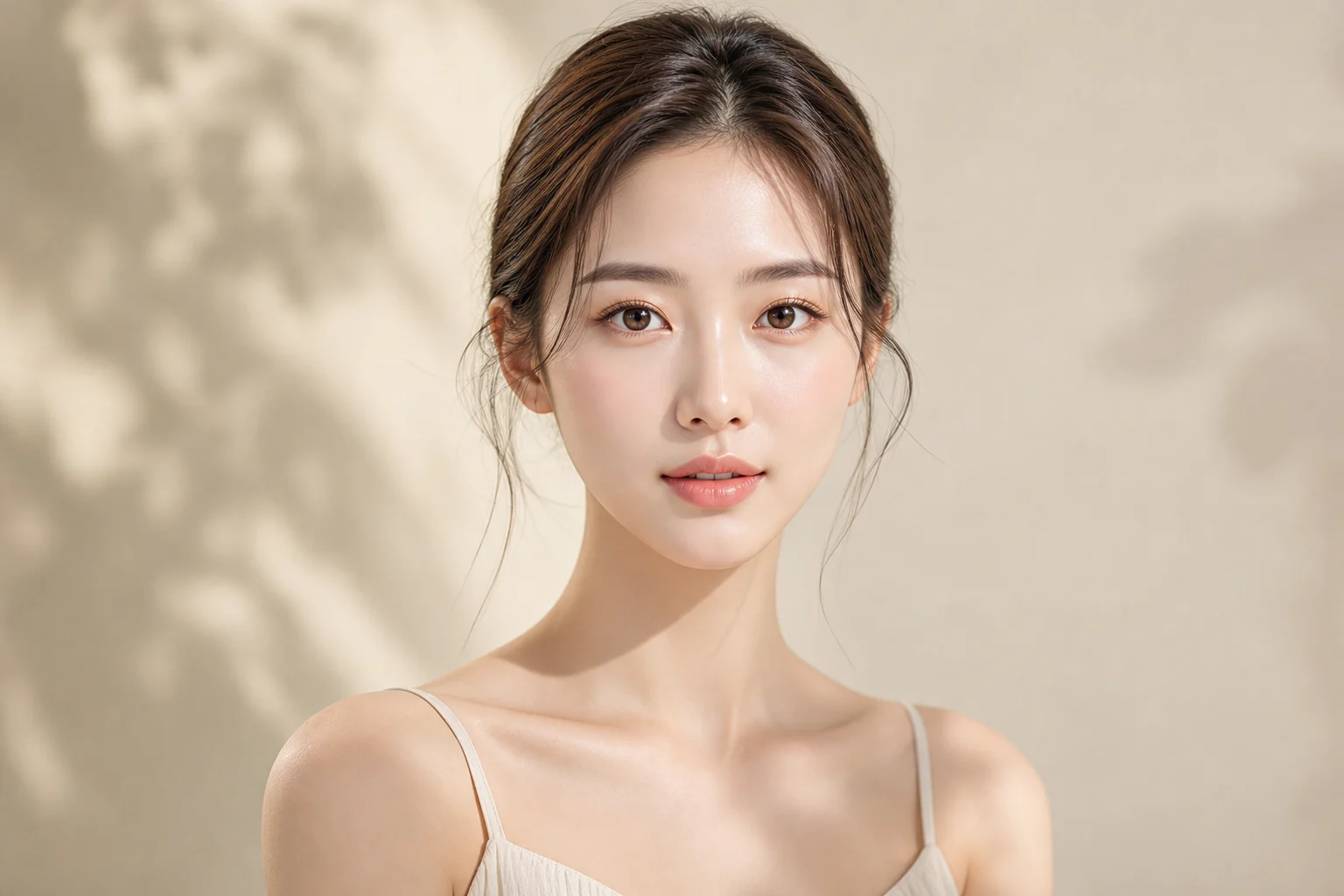
Editor’s note
Deer face type is a cultural beauty descriptor, not a medical, biometric or personality diagnosis. Lighting, expression, styling and mixed features can change the result.
Quick answer
- Deer face type usually combines large gentle eyes with a refined, slightly longer facial outline.
- The overall impression is delicate and graceful rather than round, playful or sharply lifted.
- Bunny faces tend to look shorter and rounder; puppy faces warmer; fox faces narrower and more angular.
- Makeup works best when it preserves eye openness and uses light definition instead of heavy contour.
- Many people are mixed types, so a ranked result is more realistic than forcing one label.
The deer face type is one of the best-known animal-face archetypes in Korean beauty language. It describes a face that feels luminous, gentle and elegant: large clear eyes, a delicate jaw, balanced features and a silhouette that is often longer than a bunny or puppy type.
The label is useful when it helps you describe visual structure, choose makeup references or understand an AI result. It becomes misleading when it is treated as proof of personality, attractiveness or ethnicity.
This guide gives you a feature-by-feature self-check, a comparison table, styling ideas and clear limits so you can use the term without overreading it.
What does deer face type mean?
In animal-face beauty culture, deer does not mean a literal resemblance to an animal. It is shorthand for a soft, alert and graceful facial impression. The eyes usually carry the strongest signal, while the lower face keeps the look refined rather than childlike.
A deer-type face often feels calm in a neutral expression and brighter when smiling. The category overlaps with doe eyes, but it covers the whole face—not only the eye opening, lashes or gaze. Read the broader animal face types guide.
- Open, gentle eye expression
- Refined oval or softly long face
- Delicate jaw and balanced lower face
- Light, graceful rather than sharply dramatic impression
Core characteristics and a five-step self-check
No single feature creates the type. Look for a cluster: eye openness, facial length, jaw delicacy, cheek placement and the way the features balance at rest. Large eyes alone are not enough; a short round face may read bunny, while lifted eyes and sharper cheekbones can read fox or cat.
Use a front-facing photo in soft natural light, with the camera near eye level and no beauty filter. Check your neutral face, then a relaxed smile. Score the eyes, outline, jaw, cheeks and overall mood as strong, possible or weak. Compare the same cues in the animal face type chart.
- Eyes look open and gentle rather than sharply lifted.
- Face length is refined or slightly longer than its soft width.
- Jawline is smooth and delicate rather than broad or heavily angular.
- Cheeks add softness without creating a strongly round silhouette.
- Several cues point to deer after comparison with nearby types.
| Area | Typical deer cue | What can change it |
|---|---|---|
| Eyes | Large, clear, gentle; more open than lifted | Liner, lashes, squinting and camera angle |
| Face outline | Oval, refined or slightly long | Lens distortion, hair volume and head tilt |
| Jaw | Delicate, smooth and not heavily angular | Contour, shadow and expression |
| Cheeks | Soft but not strongly round or plush | Smile, blush placement and focal length |
| Overall mood | Graceful, calm, bright and delicate | Styling, posture and facial tension |
Deer face vs bunny, puppy and fox
The most reliable comparison is not “cute versus pretty.” Compare geometry and energy. Bunny is usually shorter and rounder, puppy is warmer and more approachable, and fox is narrower with a stronger lifted direction.
Deer sits between softness and refinement. It can share large eyes with bunny or puppy and a longer outline with fox, but the combined impression remains gentle rather than playful or sharp. If your question is only about eye shape, use the doe eyes meaning guide.
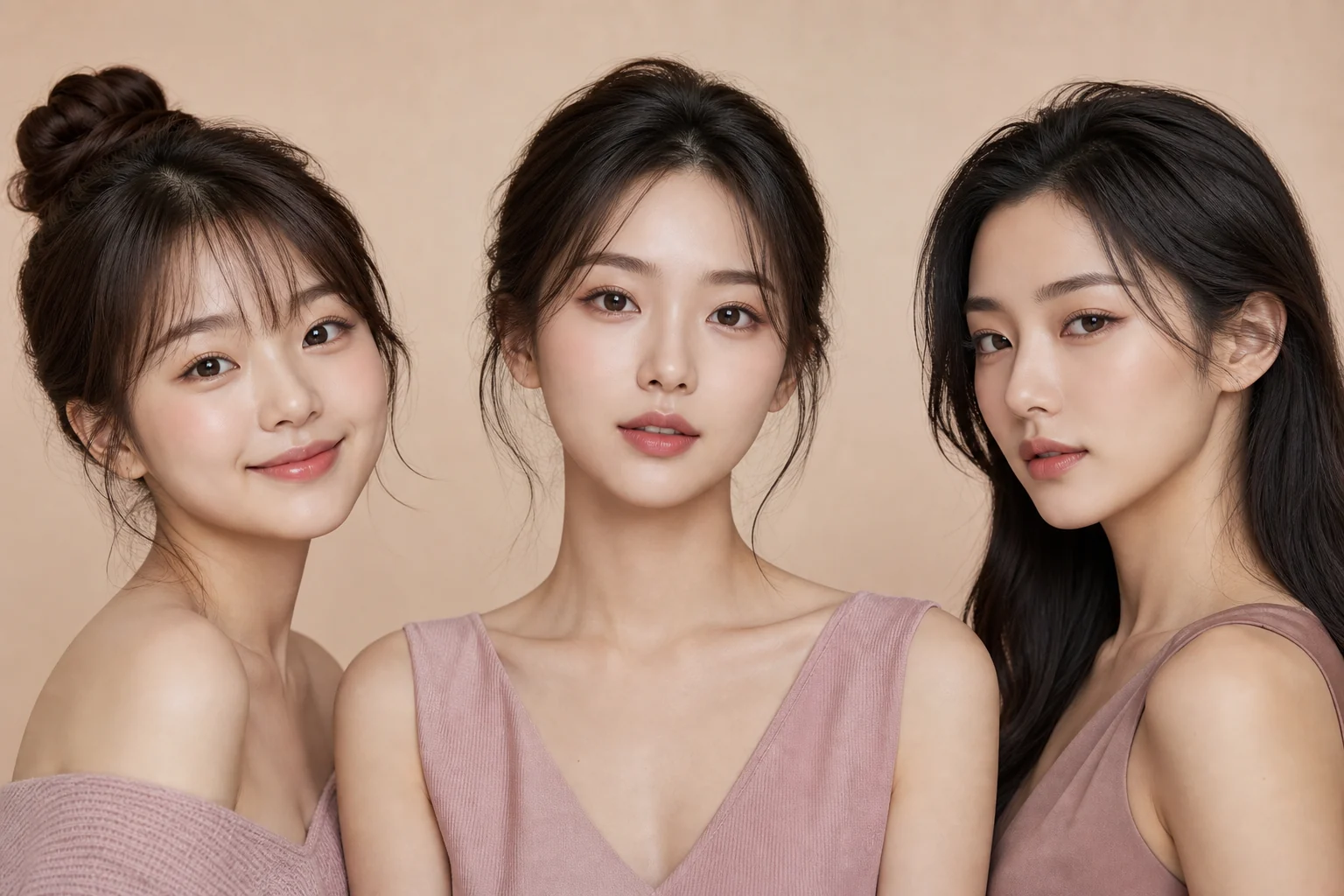
| Type | Eye direction | Face outline | Dominant impression |
|---|---|---|---|
| Deer | Open, clear, gentle | Refined oval or slightly long | Graceful and delicate |
| Bunny | Round, bright, lively | Shorter and rounder | Playful and youthful |
| Puppy | Soft, friendly, sometimes downturned | Soft oval or rounded | Warm and approachable |
| Fox | Narrower and lifted | Longer and more angular | Sleek and mysterious |
Makeup and photo styling for deer face type
Deer-face makeup usually works by protecting visual openness. Keep the inner eye bright, use fine separated lashes, and extend definition softly rather than drawing a thick upward wing. Natural brows and restrained shading support the delicate balance.
Place blush lightly toward the upper outer cheeks and use a gentle highlight through the center. Heavy jaw contour or extremely sharp brows can pull the impression toward fox or cat. For photos, use window light, eye-level framing and enough distance to avoid wide-angle distortion.
- Thin brown or soft charcoal liner close to the lash line
- Separated lashes instead of a dense mascara block
- Softly defined brows with a natural arch
- Light outward blush rather than a very round center
- No beauty filter when comparing structure
Mixed types, AI results and limits
Animal-face labels are descriptive shortcuts. A person can have deer-like eyes, bunny-like cheeks and a fox-like jaw at the same time. Hair, makeup, expression and camera distance can move the result between categories.
Use an AI score as a prompt for comparison, not a verdict. The most useful output is often a top-two or top-three ranking with explanations of which features produced each signal.
See whether deer is your strongest animal-face signal
Use the checklist first, then compare your photo result with deer, bunny, puppy, fox and the full animal-face chart.
Deer face type FAQ
Research and methodology notes
-
Keyword opportunity reviewGSC showed no qualifying 10–30 position new-page query; broader animal-look-alike intent is already served by the homepage and an existing guide.
-
Similarweb and Semrush validationSimilarweb phrase-match, related and question tabs were checked. Data was sparse for the narrow term, so Semrush US was used as a labeled fallback: deer face type volume 210, KD 33; deer face type makeup volume 40, KD 20.
-
Editorial scopeThis page treats animal-face language as flexible cultural vocabulary rather than scientific classification.