Fox Face Shape vs Cat Face: Features, Eyes, Makeup and Self-Check
A practical comparison of two sleek animal-face impressions, with clear ways to separate face structure from eye-only styling cues.

Editor’s note
Fox and cat face labels are informal beauty-language archetypes, not biometric, personality or attractiveness diagnoses. Lighting, expression, makeup, lens distance and cultural context can change the impression.
Quick answer
- Fox face shape usually reads longer, narrower and more directional, with a focused or slightly mysterious effect.
- Cat face type often reads balanced, lifted and polished, with sharper eye and jaw definition but a more compact overall rhythm.
- Both can include lifted or almond-shaped eyes, so eye angle alone cannot separate them.
- Compare face length, cheekbone direction, lower-face taper and neutral expression before judging the label.
- A mixed fox-cat result is normal.
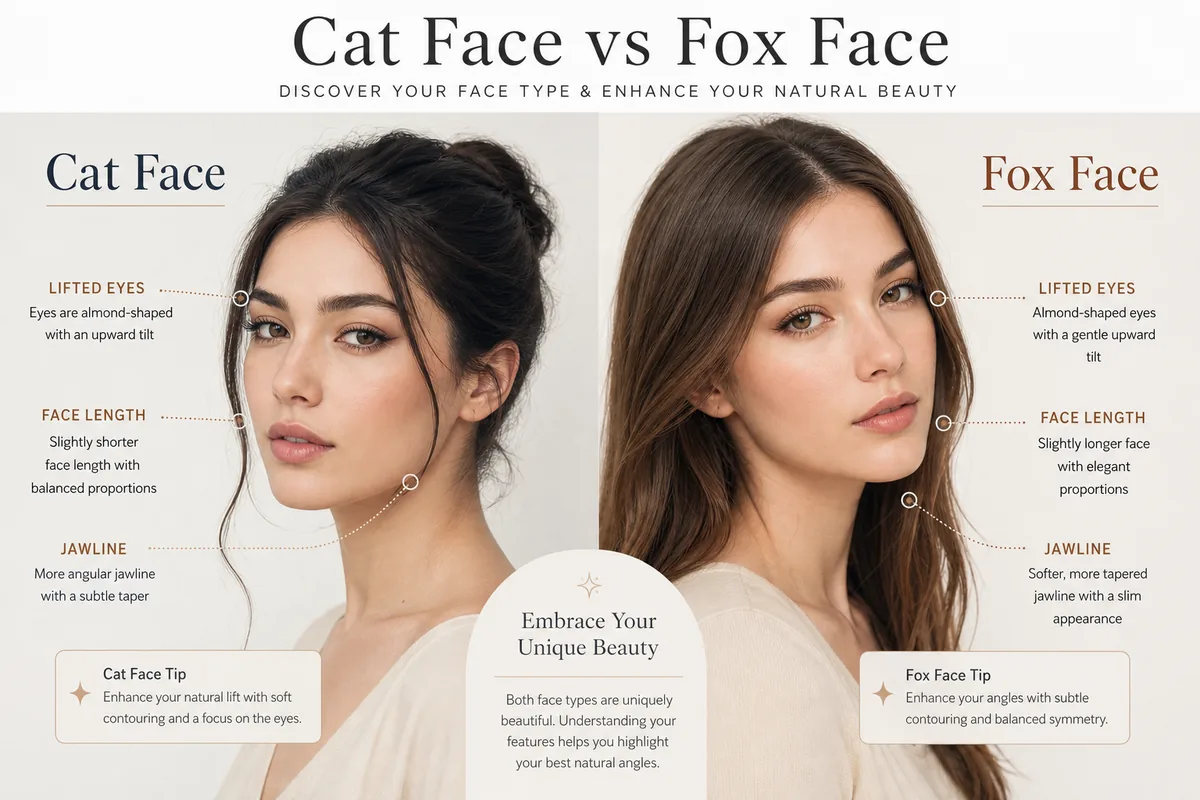
Fox face shape and cat face type are easy to confuse because both can look sleek, lifted and defined. The phrase fox face shape usually points to a longer, narrower and more directional impression, while a cat face often feels balanced, compact and polished even when the eyes are similarly lifted.
The useful distinction is how the eyes work with face length, cheekbones, jawline and expression. This guide keeps the comparison separate from the single-type fox face type guide, the cat face type guide and the eye-only fox eye shape guide.
What fox face shape and cat face type mean
Fox face shape is a shorthand for a directional facial impression. People often use it when the face looks slightly elongated or narrow, the eyes guide attention outward or upward, the cheekbones create a clear plane, and the lower face tapers without looking extremely round. The mood can feel alert, refined, mature or quietly mysterious. None of those words describes a personality; they describe how a photo is commonly read.
Cat face type is a neighboring archetype with a cleaner, more balanced sharpness. Almond or lifted eyes, defined cheeks and a neat V-line can contribute, but both labels overlap. Record a leading impression and a secondary signal rather than an either-or verdict.
- Fox usually starts with direction, length and a tapered flow.
- Cat usually starts with lift, balance and refined definition.
- Both can appear sleek, almond-eyed or cheekbone-defined.
Fox face shape vs cat face: a side-by-side comparison
When the impressions overlap, compare the whole visual rhythm. Fox cues often pull the eye along a longer line, while cat cues feel more centered and polished. Use the table as an observation prompt rather than a scoring chart; matching both columns is normal.
| Area | Fox face shape | Cat face type |
|---|---|---|
| Overall outline | Narrow, tapered or slightly elongated | Balanced, neat and often more compact |
| Eyes | Directional, lifted or focused; length may matter | Almond, lifted or sharp with a polished balance |
| Cheekbones | Create a longer plane or forward direction | Look defined but contained within a balanced outline |
| Jaw and chin | Tapered, sometimes longer or more angular | Clean V-line, pointed or neatly structured |
| Expression | Alert, composed, sly or quietly mysterious | Confident, elegant, focused or refined |
Five signals that make a face read more fox-like
The first fox signal is direction. Look at whether the eyes, brows, cheekbones and jaw seem to guide the viewer toward the outer edges of the face. A lifted outer corner can contribute, but the effect becomes more fox-like when the rest of the face supports the same outward movement.
Other signals are proportion and controlled definition: a gently elongated flow, clear cheekbone planes, a tapered jaw and a focused expression. If only the eyes look fox-like, describe a fox-eye cue instead of calling the entire face a fox type.
- Directional eye and brow lines
- A narrow, tapered or gently elongated outline
- Defined cheekbone planes rather than fully round transitions
- A controlled, alert or composed neutral expression
Five signals that make a face read more cat-like
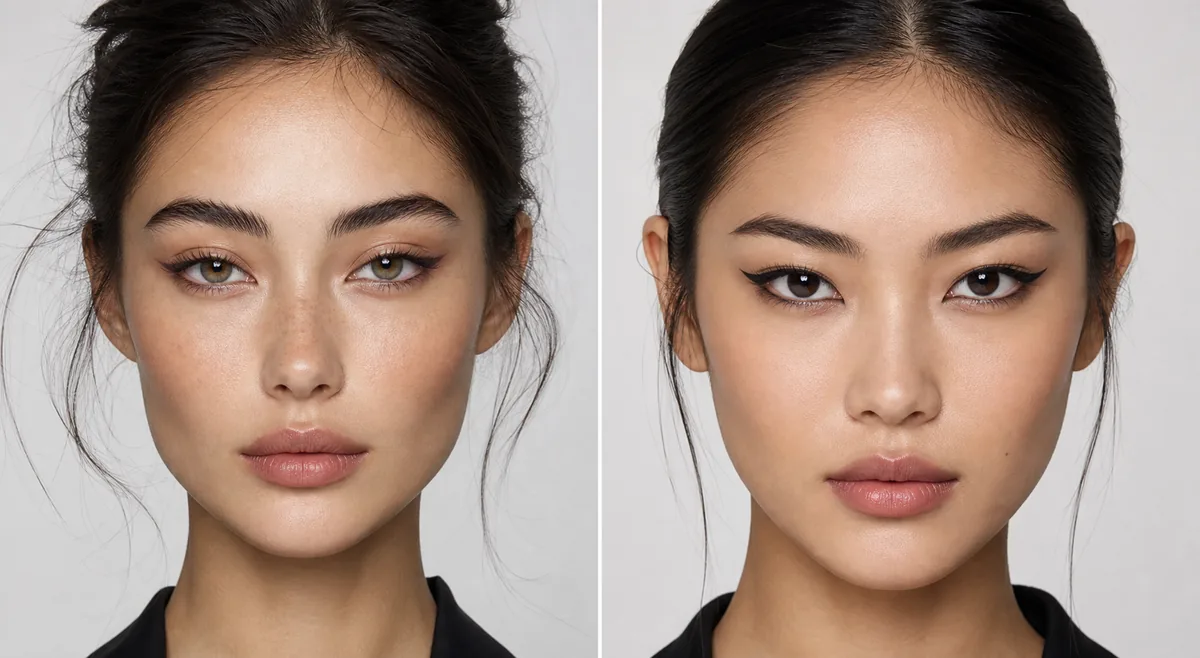
Cat face type often begins with a clear eye shape, but the overall impression is usually more balanced than elongated. Almond or lifted eyes, clean brows and a neat chin can create polish without making the face feel long. If the eyes are lifted, the jaw is sharp and the face stays balanced, cat language may fit better than fox language.
- Almond, lifted or cleanly defined eyes
- A compact, balanced relationship between forehead, cheeks and chin
- A neat V-line or pointed lower face
- Controlled brows and a polished expression
Why fox eyes and cat eyes are not enough
Fox eye shape and cat eye shape overlap more than many comparison posts suggest. Both can involve almond openings, a raised outer corner, a narrow appearance or a deliberate liner effect. The same eye can look more fox-like in a relaxed three-quarter photo and more cat-like after a lifted liner or a strong brow shape.
To separate the eye cue from the full-face label, use a neutral photo and compare eye direction with cheek width and jaw taper. A close wide-angle selfie can distort the outline, so the animal face shapes guide is useful when the question is structure.
Makeup and photo choices for fox versus cat styling
Fox-inspired styling usually emphasizes length and direction. A softly extended outer liner, controlled brows, restrained cheek contour and a slightly elongated lip shape can reinforce the impression. The best result follows the natural structure instead of drawing a severe wing that overwhelms the face. Soft matte definition often reads more editorial than heavy contour.
Cat-inspired styling emphasizes clean lift and balance with precise liner, tidy brows, defined lashes and a polished cheek line. For a fair self-check, use one front photo and one relaxed three-quarter photo in even daylight, at eye level and without filters. If the label changes after makeup, record the styling effect.
- Use even, front-facing light so cheekbones are not replaced by shadows.
- Keep the camera at eye level and avoid a dramatic head tilt.
- Use the same lens distance for every comparison photo.
- Treat makeup as an amplifier of cues, not proof of a fixed type.
A five-step fox face shape vs cat face self-check
If you want a broader result, upload a clear photo to the Animal Face Test and compare the AI result with your own observations. The result is a playful visual comparison, not a scientific measurement. When the output shows both fox and cat, read the percentages as a blend and inspect the photo conditions before trying to force a single answer.
A longer, softer outline may move toward deer; a rounded, bright expression may move toward bunny or puppy; a very narrow and composed expression may overlap with snake language. Describe which cues are doing the most work instead of collecting labels.
- Check face length and width before looking at eyeliner.
- Compare eye direction at rest, not only in a posed expression.
- Read the jaw and chin from front and three-quarter views.
- Record a primary impression plus a secondary cue when the result is mixed.
What this comparison can and cannot tell you
Fox and cat face language can be useful for makeup references, photo direction and understanding why two styles create different moods. It cannot tell you who you are, how attractive you are, what your personality is, or what a face should look like. The labels come from cultural beauty conversations and change across communities.
A single photo is limited: lens distortion, expression, hairstyle and lighting can change the apparent outline. Keep conditions similar, avoid using a score for health or self-worth, and read the broader animal face types overview or Korean animal face types test for context.
Want a photo-based animal face comparison?
Upload a clear photo to explore whether your overall impression leans fox, cat, deer, puppy, bunny or another animal-face archetype.
Fox face shape vs cat face FAQ
Editorial notes
-
Keyword boundaryThis page targets fox face shape comparison intent. The existing fox face type and cat face type pages remain the owners of the single-archetype definitions.
-
Photo methodFront-facing and three-quarter photos are compared under similar light so lens distance, expression and makeup do not dominate the reading.
-
Broader contextAnimal-face labels are treated as flexible cultural vocabulary for styling and curiosity, not as biometric, medical or personality classifications.Read the animal face types overview