Bunny Face Shape vs Puppy Face: Eyes, Features, Makeup and Self-Check
A practical way to tell a bright, compact bunny impression from a warm, soft puppy impression without reducing either one to a single feature.

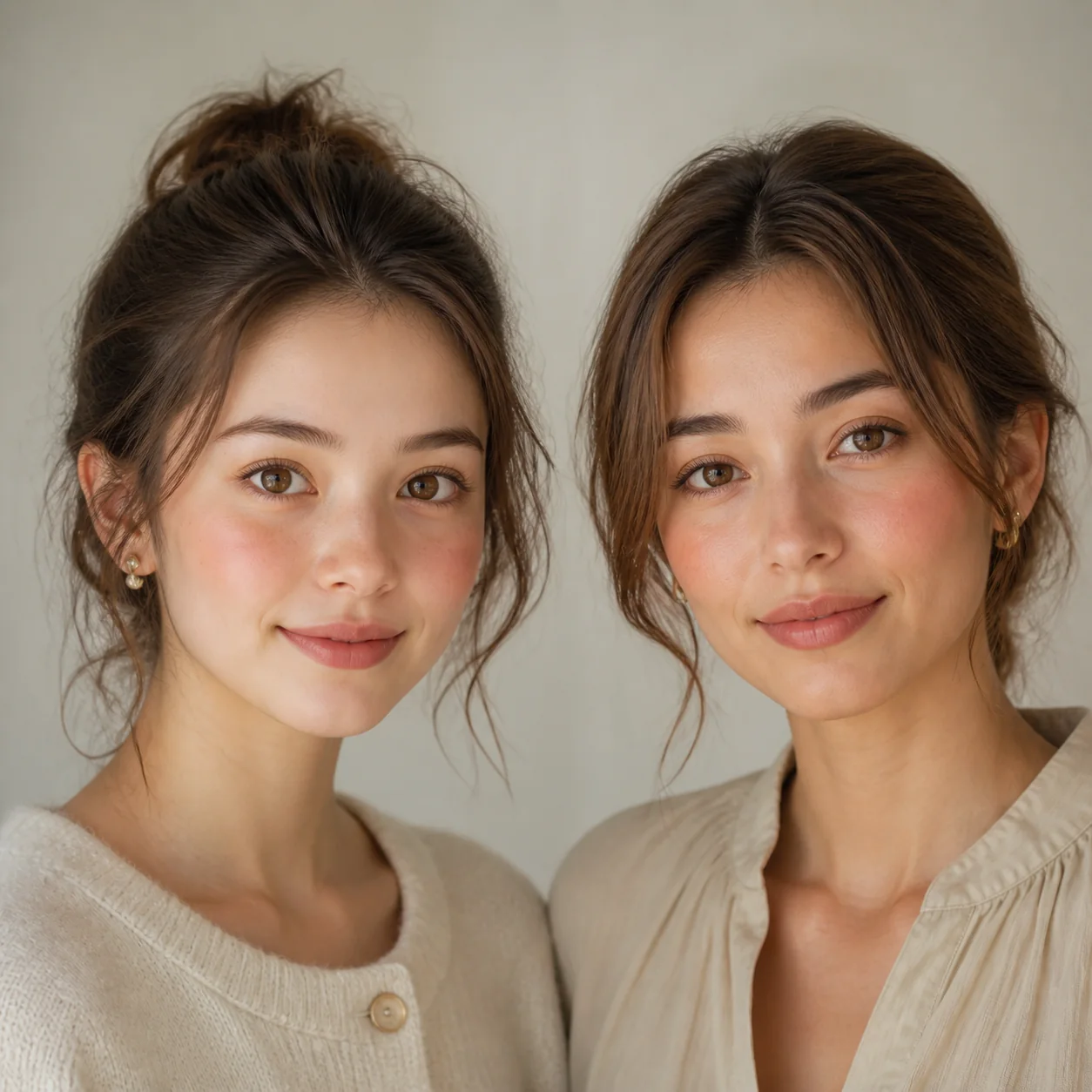
Editor’s note
Bunny and puppy face labels are informal beauty-language archetypes, not scientific, biometric or personality diagnoses. Makeup, expression, lighting and camera distance can change the impression.
Quick answer
- Bunny face shape usually reads bright, compact, rounded and youthful.
- Puppy face type usually reads warm, soft and friendly, often with gentler or slightly downturned eyes.
- Compare face length, eye direction and lower-face shape instead of judging eye size alone.
- Bunny makeup keeps the eyes open and blush fresh; puppy makeup often emphasizes softness and a relaxed expression.
- One person can show both signals, and a clear photo is more useful than a rigid label.
The phrase bunny face shape usually describes a bright, soft and compact facial impression. A puppy face type is also soft, but the emotional read is often warmer and more open, with a relaxed mouth or gently downturned eye direction.
The distinction is useful when a photo result feels close to both types. It is not a ranking of attractiveness. Use the comparison as a styling vocabulary, then check how the whole face reads in neutral light.
This article focuses on the comparison intent. For a broader definition and bunny self-check, read the bunny face type guide; for the eye-area signal, see the puppy eyes meaning guide.
What bunny face shape and puppy face type mean
Bunny face shape is a shorthand for several cues working together: bright or rounded eyes, soft cheeks, a neat central area and a shorter or compact outline. The overall effect tends to feel lively, fresh and youthful.
Puppy face type uses a neighboring set of cues: soft eyes, a friendly expression, gentle cheeks and a rounded or soft-oval outline. The eyes may angle slightly downward at the outer corners, but that cue is not required. The impression is usually warm before it is playful or polished.
Neither label should be inferred from one feature. Large eyes can appear in bunny, puppy or deer impressions, while a small chin can be changed by angle, lens distance and expression. The useful question is which pattern stays visible after styling is simplified.
- Bunny usually starts with brightness and compact roundness.
- Puppy usually starts with softness and approachable warmth.
- Both can have gentle cheeks and a youthful effect.
- Neither type is a scientific face shape or a personality test.
Bunny vs puppy: compare the whole face
When the two types are hard to separate, start with face length and eye direction rather than with makeup. Bunny tends to look more compact and open. Puppy tends to look more relaxed and emotionally soft, even when the outline is similar.
The table is a prompt for observation, not a scoring system. A face can match the bunny column in the eyes and the puppy column in the expression, which is a normal mixed result.
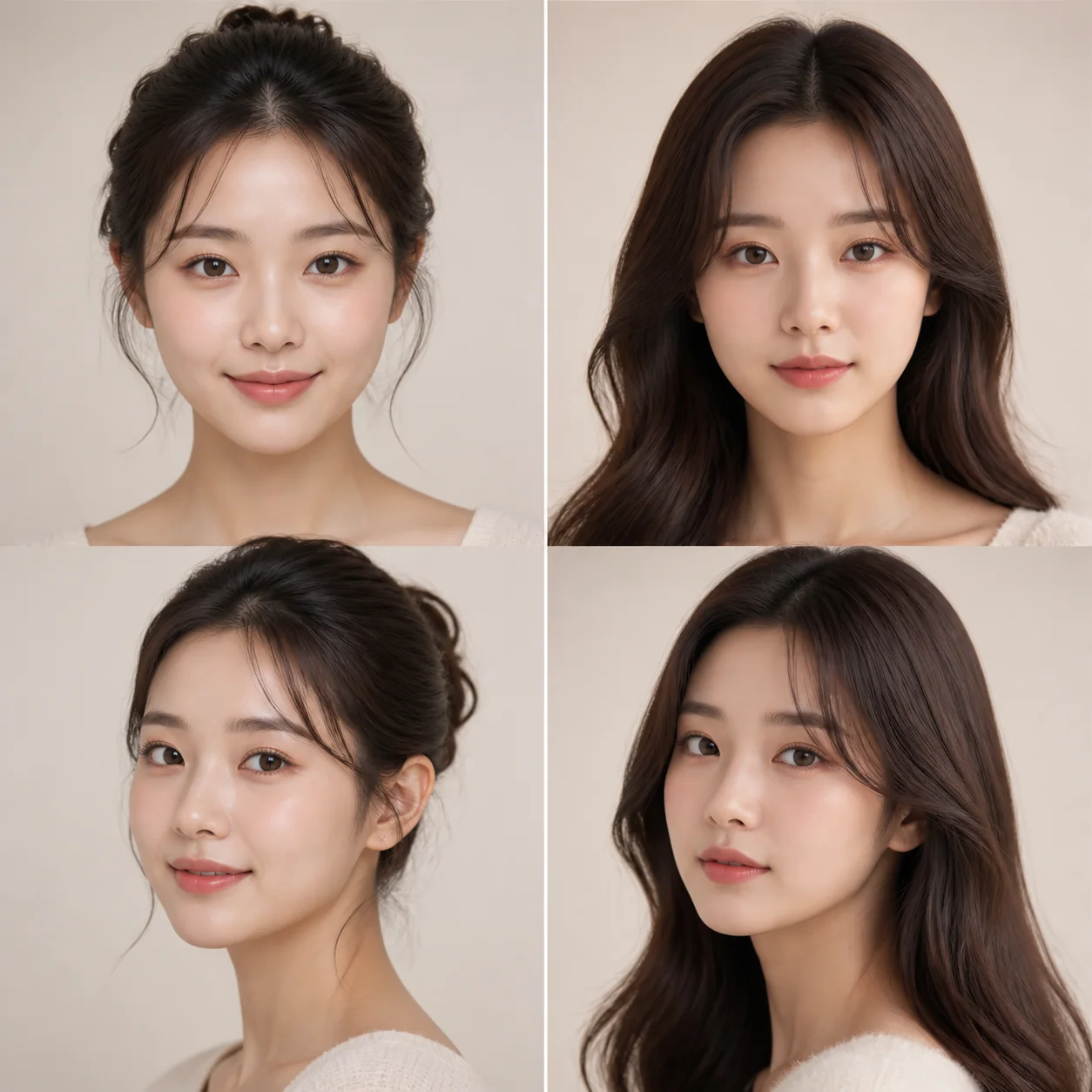
| Area | Bunny face shape | Puppy face type |
|---|---|---|
| Eyes | Bright, round or softly open | Soft, gentle or slightly downturned |
| Face length | Shorter, compact or softly rounded | Soft oval; length is less important than warmth |
| Cheeks | Fresh, visible and lightly rounded | Soft and friendly, often noticeable when smiling |
| Mouth and expression | Lively, clear and playful | Relaxed, sweet and approachable |
| First impression | Bright and youthful | Warm and comforting |
Bunny eyes vs puppy eyes
The eye area often creates the first impression, but it should not decide the entire type. Bunny eyes tend to look clear, open and centered, with a rounded or softly lifted openness. Puppy eyes tend to look tender, relaxed or slightly lowered at the outer edge, creating a more pleading or friendly mood.
Look at the eyes in a neutral expression and then while smiling. If the shape changes dramatically with pose, record the expression as a styling cue rather than a fixed feature. The puppy eyes article can help when the question is mainly about eye direction.
- Check whether the eye opening stays round when the face is relaxed.
- Notice the outer-corner direction without pulling the eyelids upward.
- Compare the distance from the eyes to the cheeks and mouth.
- Repeat the check in a front photo and a natural three-quarter photo.
Makeup and photo choices that change the result
Bunny-inspired makeup usually protects openness: fine liner, separated lashes, soft brows and fresh blush keep the center of the face light. Strong lower-eye shadow or heavy contour can make the same face look more fox-like or mature.
Puppy-inspired makeup usually protects softness: a diffused lash line, rounded blush, relaxed brows and a gentle lip shape can support the warmer impression. Very sharp liner or a lifted outer corner may shift the photo toward cat or fox language.
For a fair comparison, use the same camera distance, neutral lighting and expression. Avoid beauty filters, wide-angle close-ups and dramatic head tilts because they enlarge the center of the face or change the apparent eye direction.
- Use soft, even light instead of a strong overhead shadow.
- Keep the camera at eye level and take one front photo.
- Take a second photo at a relaxed three-quarter angle.
- Compare before and after makeup rather than treating either image as the only truth.
A five-step self-check before choosing a label
A simple self-check is more reliable when it separates structure from styling. Use a clear photo with low contrast, little makeup and no filter. Mark each step as stronger, mixed or unclear instead of forcing a yes-or-no answer.
If the result is split, choose a primary impression and a secondary impression. That is more honest than deciding that a single eye angle proves a type. The animal face type chart is useful for widening the comparison when bunny and puppy are not enough.
- Look at face length: does the face read compact, or soft-oval and relaxed?
- Check the eyes at rest: bright and open, or tender and slightly downturned?
- Observe the cheeks and lower face without smiling first.
- Add the smile: does it make the impression more lively or more comforting?
- Write one primary and one secondary cue, then compare a second photo.
Mixed types, camera limits and what not to overread
Bunny and puppy are neighboring labels, so overlap is expected. Bright eyes can sit on a warm face; soft cheeks can appear with a longer deer-like outline; and makeup can move the visible impression from one category to another.
A photo test can organize visible cues, but it cannot measure personality, health, ethnicity or objective beauty. If the answer changes between photos, look for the changed condition—lighting, camera distance, expression or makeup—before assuming that the label is unstable.
For a broader five-type comparison, try the Korean animal face types test. It works best as a playful comparison tool alongside your own observation.
Want a photo-based comparison?
Upload a clear photo to explore whether your overall impression leans bunny, puppy, deer, cat, fox or another animal-face archetype.
Bunny face shape vs puppy face FAQ
Editorial notes
-
Keyword boundaryThis article targets comparison intent around bunny face shape and puppy face type; broad animal-face definitions remain on the site's existing guide.
-
Photo methodFront and three-quarter photos are compared under similar light so expression and camera angle do not dominate the reading.
-
Editorial scopeAnimal-face labels are treated as flexible cultural vocabulary, not scientific classification.