Animal Face Personality vs Face Type: What's the Difference?
One is a visual style shorthand; the other is a claim about character. Learn where the two get mixed up.

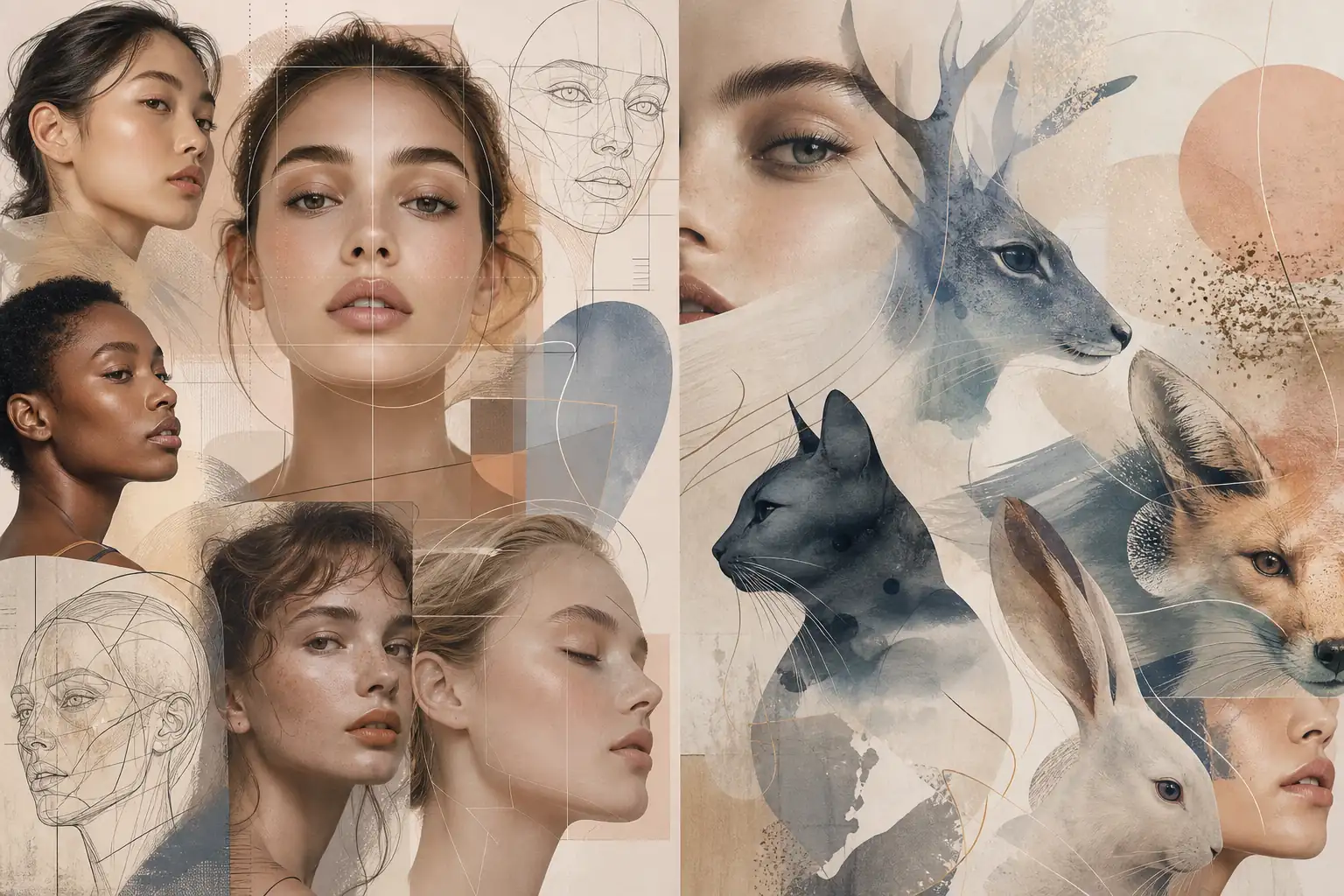
A useful distinction
Animal face types are informal style labels. They are not a scientific personality test, a diagnosis, or a measure of anyone's worth.
Quick answer
- An animal face type summarizes visible features and the style impression they create.
- Personality describes patterns in behavior, values and choices across time and situations.
- A face can prompt a first impression, but an impression is not proof of character.
- Use words such as soft, sharp or bright for the visual style; do not turn them into claims such as kind, cold or clever.
- Treat an animal-face result as playful language, not a reliable way to discover someone's personality.
The phrase animal face personality often blends two different ideas. An animal face type is a visual shorthand: people notice features such as eye shape, face outline, or the softness of a smile, then compare the overall look with a familiar animal archetype. Personality, by contrast, refers to how someone tends to think, feel, act, and make choices. A portrait can suggest an impression to a viewer, but it cannot establish those deeper traits.
That distinction matters because descriptions like cat-like, puppy-like, or deer-like can slide from appearance into assumptions. Someone may look reserved in one photograph without being unfriendly; another person may have bright eyes without being especially outgoing. The label tells you how a particular image reads to someone, not who the person is in every part of life.
This guide separates observable cues, style language, and personality claims. It includes a comparison table, a short self-check, examples of context changing a first impression, and limits to keep in mind. For a broader overview of the archetypes themselves, see our animal face types guide.
Animal Face Personality vs Face Type: The Short Answer
A face type describes how visible features are grouped in a popular style vocabulary. The description might mention rounded or angular lines, lifted or relaxed eyes, a short or long outline, or an overall soft, vivid, refined, or sharp impression. Those are statements about what appears in a photo and how a viewer interprets it.
Personality concerns qualities such as patience, curiosity, generosity, or sociability, which are understood through behavior and context. Calling someone cat-like may be playful shorthand for a sleek visual style; calling them secretive because of that face goes beyond what the label can show.
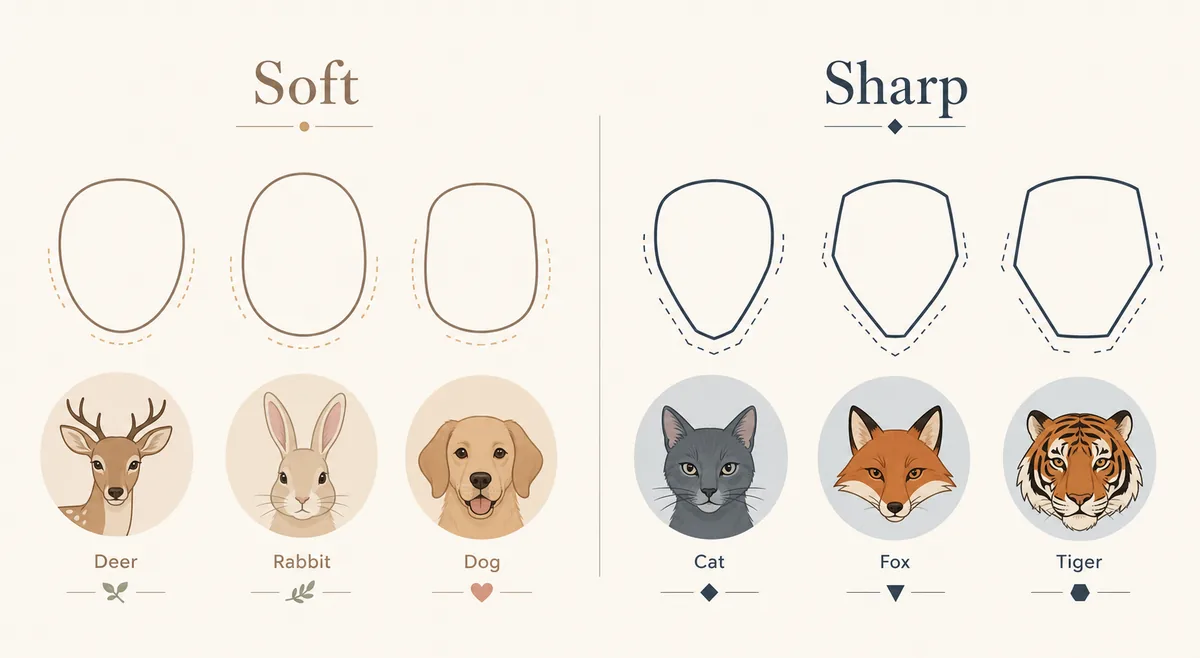
What an Animal Face Type Actually Describes
Animal-face labels usually collect several visual details into one memorable comparison. A puppy or dog shorthand might refer to rounded eyes, a soft cheek line, or a friendly-looking expression. A cat label may be used for lifted eyes and cleaner, more defined lines. A deer or fawn comparison may point to open-looking eyes and a delicate outline. These examples vary across communities; there is no single official checklist that every source follows.
Name the cues behind a label. Instead of saying only, 'You are a fox,' describe an elongated outline, lifted eye corners, or high-contrast makeup. Specific observations are clearer and less likely to turn a loose comparison into a fixed identity.
| Layer | Example | What it supports |
|---|---|---|
| Observable cue | The eyes look lifted in this photo. | A description of visible direction in one image. |
| Style shorthand | The overall look feels cat-like. | A playful comparison within a beauty vocabulary. |
| First impression | The expression reads as reserved to me. | A report about one viewer's reaction in one context. |
| Personality claim | This person must be aloof. | Not established by the face or the photograph. |
Why First Impressions Get Mistaken for Personality
Everyday language often uses the same adjective for a look and a character trait. 'Warm' can describe color and expression, but it can also describe kindness. 'Sharp' may refer to an angular outline, or it may suggest intelligence. Once a visual comparison borrows those words, it can sound as if the face has revealed something deeper than the observer actually knows.
Animal metaphors add moods borrowed from familiar stories and beauty trends. A cat may suggest coolness in one conversation and playfulness in another. These associations come from culture and the speaker, not a rule connecting a feature to a real trait.
A Careful Way to Describe an Animal Face Type
If you are comparing your own photos or talking about a style trend, use a short process that keeps observation separate from interpretation. The goal is not to eliminate playful labels; it is to make clear what those labels can and cannot say.
- Note expression, angle, distance, lighting, makeup and crop; these change what the photo emphasizes.
- List two or three visible details, such as outline, eye direction or cheek fullness.
- If useful, add a tentative animal-style comparison and explain the cues behind it.
- Keep reactions in first person: 'this looks gentle to me' describes an impression, not a fact about character.
- Compare another photo. If the label shifts, describe the changed image conditions rather than inventing a personality reason.
How the Same Cues Can Produce Different Readings
Imagine a portrait with lifted eyes and a clean, angular outline. One viewer may call the look cat-like because the eye direction and lines feel sleek. Another may choose fox-like because the longer outline is more noticeable to them. Neither label proves that the person is private, ambitious, clever, or hard to approach. The disagreement is about which visual cue each viewer prioritized.
In a second photo, the same person smiles in soft daylight. Fuller-looking cheeks and a changed expression may create a warmer impression than the first portrait. Both are readings of different images, not personality summaries.
| Photo cue | Possible style wording | Avoid turning it into |
|---|---|---|
| Lifted eye corners | A sharper or more feline look | The person is calculating |
| Round eyes and a smile | A bright or puppy-like impression | The person is always cheerful |
| Long face outline | A refined or deer-like style | The person is quiet or delicate |
Limits, Bias and Responsible Use
Animal face types are informal and culturally shaped. Lists differ and boundaries overlap, so treat a chart as one community's vocabulary rather than a universal classification system.
Do not use a face label to judge trustworthiness, competence, emotional health, or morality. That turns appearance into a shortcut for character and can reinforce unfair assumptions. A person's facial features, ethnicity, age, gender expression, disability, makeup or camera quality should never be used to rank their value or decide how they will behave.
Check what a quiz analyzes: a playful visual result is not a personality measure. Our animal face test explores resemblance. For a feature-by-feature self-check, read the Korean animal face type guide.
Explore the visual archetypes
If you are curious which animal-face style a clear portrait resembles, try the photo test as an entertainment result. It does not assess personality or define who you are.
Animal Face Personality FAQ
Cultural context
-
The Korea Times: Do you have a K-face?A cultural commentary on the language people use to describe faces in Korea. It is cited for context, not as scientific evidence about personality.Read the commentary