16 Face Type Korean Analysis: What the 16-Type Chart Means
A careful guide to the social-media face charts sometimes described as Korean 16-type analysis, including how to read the categories and how they differ from animal face types.

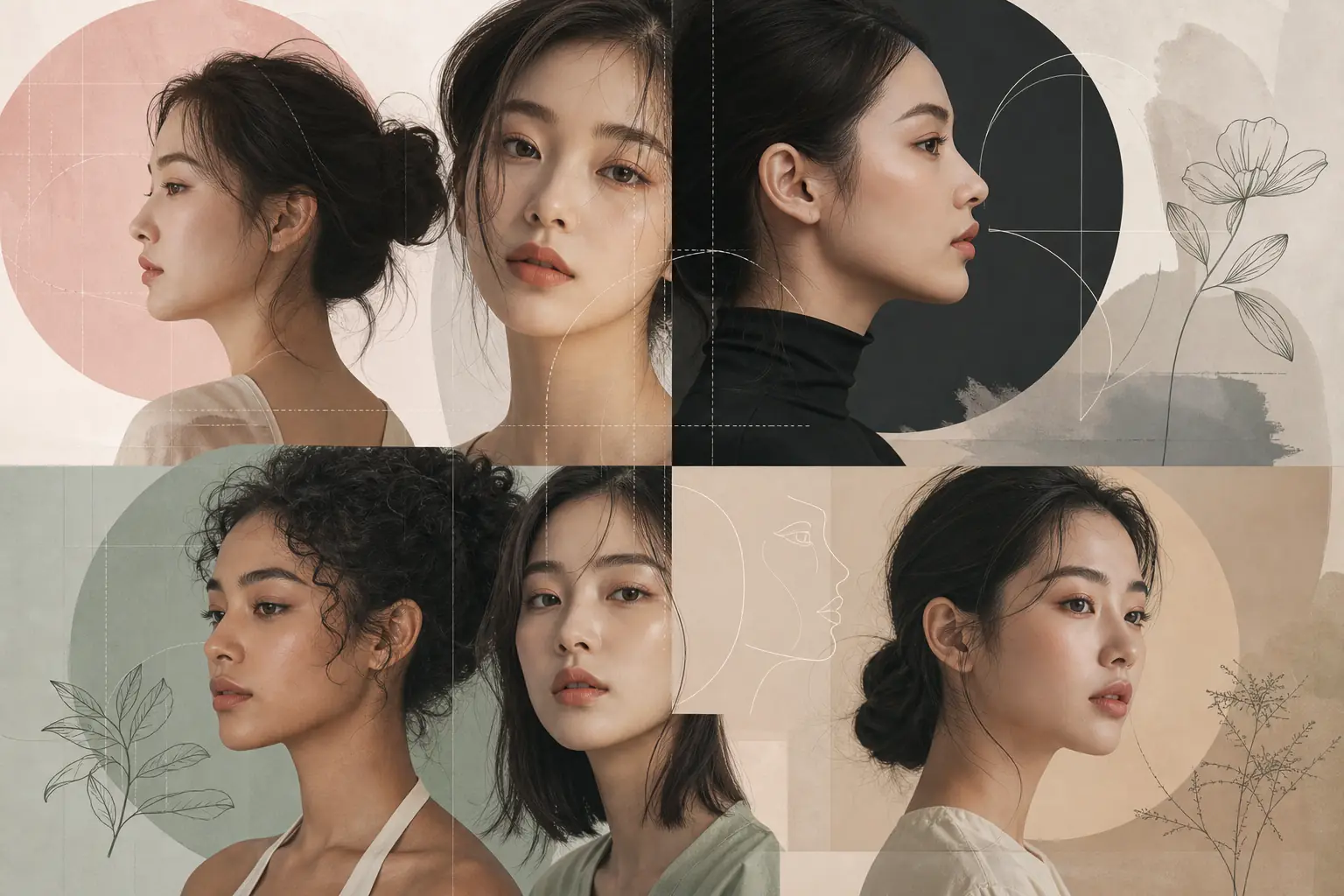
Quick clarification
There is no single scientific or universally official Korean 16-type face standard. Online charts use different labels and rules, so this guide explains the shared idea—grouping several facial signals into a larger set of archetypes—without pretending that every quiz uses the same 16 boxes.
The short answer
- 16 face type Korean analysis usually refers to a beauty or social-media classification, not a medical diagnosis.
- The number 16 often comes from combining several visual dimensions, but the exact axes vary by creator or quiz.
- A 16-type chart is different from an animal face test that compares labels such as puppy, cat, deer, rabbit, or fox.
- Use a neutral photo, compare more than one signal, and treat the result as a descriptive prompt rather than a verdict.
People searching for 16 face type Korean analysis are usually looking for a larger beauty chart than a simple round-face or oval-face calculator. They want to know how a photo can be grouped into a more specific visual archetype, often using a mix of softness, sharpness, youthfulness, face length, and overall impression.
The important catch is that “16 type” is not one locked standard. Different creators can use different names, dimensions, and scoring rules. One chart may feel close to face MBTI language, while another may be a beauty-style grid built from four paired signals. Read the framework on the page in front of you before assuming that a label means the same thing everywhere.
This topic also sits next to, but does not replace, the site’s Korean Animal Face Types Test. That tool focuses on five animal archetypes—puppy, cat, deer, rabbit, and fox—while this guide explains how a broader 16-type chart can organize facial impressions. For the animal system itself, start with the five-step self-check guide.
What Does 16 Face Type Korean Analysis Mean?
In plain language, 16 face type Korean analysis is a way of turning a complex visual impression into a smaller set of repeatable descriptions. Instead of asking only whether a face is round, long, or heart-shaped, the chart may look at how several features work together: the eyes, brow direction, cheeks, jawline, vertical length, contrast, and the mood created by a neutral expression.
The labels are usually closer to style vocabulary than to biology. Words such as soft, refined, cute, cool, youthful, elegant, or sharp describe the way a face is read in a particular photo. They do not measure personality, worth, health, or attractiveness, and they should not be treated as permanent facts about a person.
The number 16 can make a chart look more precise than it really is. Four binary choices create sixteen combinations mathematically, but the meaningful part is whether the chosen dimensions are explained clearly and applied consistently. A useful page tells you what each axis means, shows borderline cases, and admits when makeup, lighting, camera angle, or expression can change the result.
How a 16-Type Face Grid Is Usually Built
The following are practical reading axes, not a claim that every Korean-style chart uses the same four pairs.
Most larger face-type systems become easier to understand when you stop memorizing labels and first identify the dimensions behind them. A chart might combine four paired signals, or it might use a different set of categories with a similar 16-box result. The table below gives a neutral way to inspect the chart you are using.
When a result feels wrong, return to the axis instead of arguing with the label. For example, a face can have soft cheeks but directional eyes, or a youthful center but a long, refined outline. A mixed reading is not a failure; it is often the reason two quizzes give different names.
| Visual axis | Look for | What it changes |
|---|---|---|
| Soft ↔ defined | Cheek fullness, jaw edge, and transition between features | Whether the face reads gentle and rounded or crisp and structured |
| Compact ↔ elongated | Overall face length, nose line, and vertical spacing | Whether the impression feels youthful and compact or refined and vertical |
| Open ↔ directional eyes | Eye roundness, lift, width, and outer-corner direction | Whether the first impression feels bright and open or sleek and focused |
| Sweet ↔ composed mood | Expression, contrast, brow weight, and styling | Whether the same structure reads playful, soft, polished, or mature |
How to Read the Four Broad Style Groups
A 16-box grid is easier to use when you first place yourself in a broad quadrant, then look for the smaller label inside it. The four groups below are not official names; they are a practical bridge between the chart’s detailed labels and the visible features in a photo.
Do not choose the group that sounds most flattering. Choose the one that explains the most independent signals at the same time. If only one feature fits, keep the result tentative and compare a second photo.
Soft and youthful
This group usually feels rounded, approachable, and fresh rather than angular or severe.
- Signature signals: rounder eyes, softer cheeks, shorter-looking vertical proportions, and low-to-medium contrast
- Overall impression: cute, warm, bright, approachable
- Often confused with: rabbit, puppy, or other soft animal-face labels
Soft and refined
The face keeps gentle transitions but adds more length, delicacy, or calm balance.
- Signature signals: large gentle eyes, finer features, a longer outline, and a light jaw transition
- Overall impression: graceful, calm, elegant, delicate
- Often confused with: deer face, oval-face descriptions, or youthful soft types
Defined and youthful
This group combines clear structure with lively or compact proportions, so it can look energetic rather than mature.
- Signature signals: defined eye corners, visible cheek or jaw edges, compact spacing, and stronger contrast
- Overall impression: lively, chic, expressive, high-energy
- Often confused with: cat face, fox eye, or sharp-but-young labels
Defined and refined
This group usually reads sleek, directional, and composed, especially in a neutral front-facing photo.
- Signature signals: lifted eyes, longer lines, cleaner jaw definition, and medium-to-high contrast
- Overall impression: polished, mature, cool, sophisticated
- Often confused with: fox, cat, or other sharp animal-face archetypes
16-Type Analysis vs Korean Animal Face Types
The two systems can describe similar features, but they answer different questions. A 16-type chart asks which combination of visual dimensions best describes the face. An animal-face system asks which familiar animal archetype creates the closest overall impression. One is a broader grid; the other is a smaller set of memorable metaphors.
That difference matters for search intent. Someone looking for a 16 face type Korean analysis page may want definitions, category logic, and a way to compare chart labels. Someone opening the Korean animal face test wants to upload a selfie and receive a puppy, cat, deer, rabbit, or fox result. A page should not redirect one task into the other without explaining the boundary.
You can use both as complementary prompts. Start with the broad axis—soft or defined, compact or elongated—then use the animal labels to describe the emotional impression. For a visual reference to the animal system, the animal face type chart is more relevant than a 16-type grid.
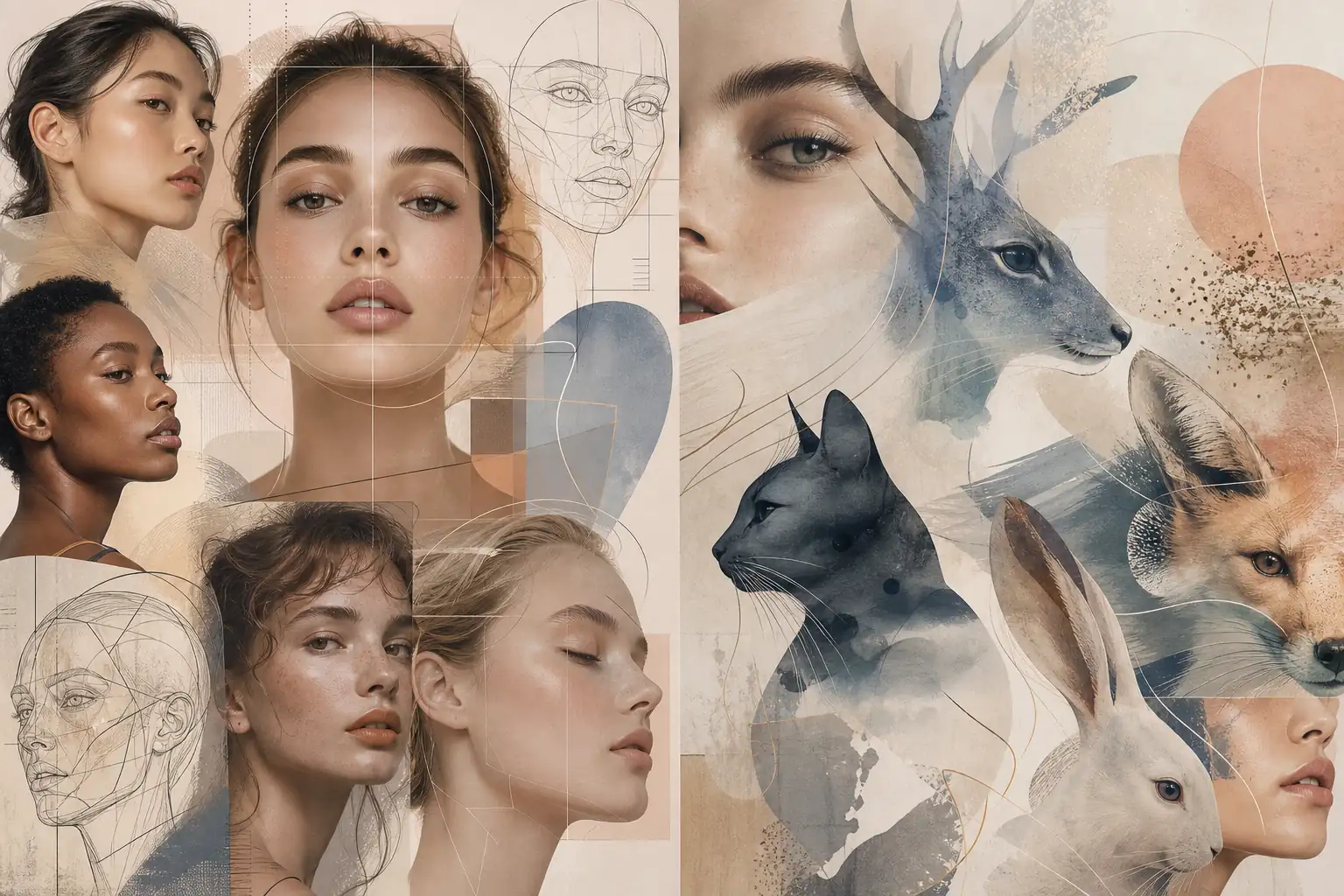
| Question | Better match | Why |
|---|---|---|
| How do the 16 categories or axes work? | 16-type analysis guide | The reader needs definitions, boundaries, and examples |
| Which animal face type do I resemble? | Animal Face Test | The reader wants a photo-based archetype result |
| What are the nine animal types? | Animal face type chart | The reader needs a side-by-side reference table |
| Do my eyes look like deer, puppy, cat, or fox eyes? | Animal eye type guide | The question is about one feature rather than a full grid |
A Practical Self-Check Before You Trust a Result
Use one neutral front-facing photo first. Keep the camera at eye level, use even light, and keep your brow, eyes, cheeks, and jaw visible. Heavy filters, extreme angles, large lenses, and dramatic expressions can push the same face toward a different box.
Then write down the evidence before naming a type. Describe the eyes, vertical length, cheek softness, jaw definition, and expression in plain words. If four independent observations point in the same direction, the chart is more useful. If the only reason is that you like the label, the result is not yet informative.
Finally, compare the chart with a second photo taken under different conditions. A stable pattern is more meaningful than one exact score. If you want a separate animal-archetype result, you can try the Animal Face Test after this self-check and compare the explanation rather than treating either system as a final judgment.
- Use a neutral expression before testing a smiling or styled photo.
- Check the whole face, not only eye shape or jawline.
- Record which axis is uncertain instead of forcing a category.
- Compare two photos before deciding that a label is stable.
- Treat the result as entertainment and self-description, not a diagnosis.
Photo Limits, Privacy, and Mixed Results
Face analysis is sensitive to the image as well as the person. Lighting can soften or sharpen a jawline; a wide-angle lens can enlarge the center of the face; bangs can hide the brow; and makeup can change the apparent eye direction. These effects are not evidence that your face has permanently changed categories.
Mixed results are also normal. A face can have soft cheeks and directional eyes, or a youthful center with a long, refined outline. In a 16-type system, that may place you near a boundary. In an animal system, it may create a cat-plus-fox or deer-plus-rabbit result. The overlap is information about the photo and the framework, not a problem to correct.
Before uploading a face photo to any online service, read its privacy policy and decide whether the entertainment value is worth sharing the image. Avoid treating an automated percentage as a scientific measurement, and do not use a beauty label to make health, identity, or relationship decisions.
- Retake the photo if the face is strongly angled or partly covered.
- Do not compare a filtered selfie with an unfiltered reference image.
- Use a range of descriptions when a face sits between two categories.
- Review the service privacy policy before uploading a recognizable photo.
Compare the Chart With an Animal Face Result
Use the 16-type framework to describe structure, then try the Animal Face Test if you want a separate animal-archetype comparison.
FAQ About 16 Face Type Korean Analysis
Scope and References
-
How to interpret the keywordThe page treats 16 face type Korean analysis as a beauty-language and social-media topic, not as a scientific classification or official medical category.
-
Example of 16-type face analysis contentA consumer beauty explainer illustrates why online 16-type terminology can vary by framework and should be read with context.Read the consumer beauty explainer